Journal · field notes from the gateway
Entering Sorong Harbour at Night
Entering Sorong harbour at night is workable for a well-prepared crew, but it is a working commercial roadstead, not a lit marina fairway: expect ferry and cargo movements…
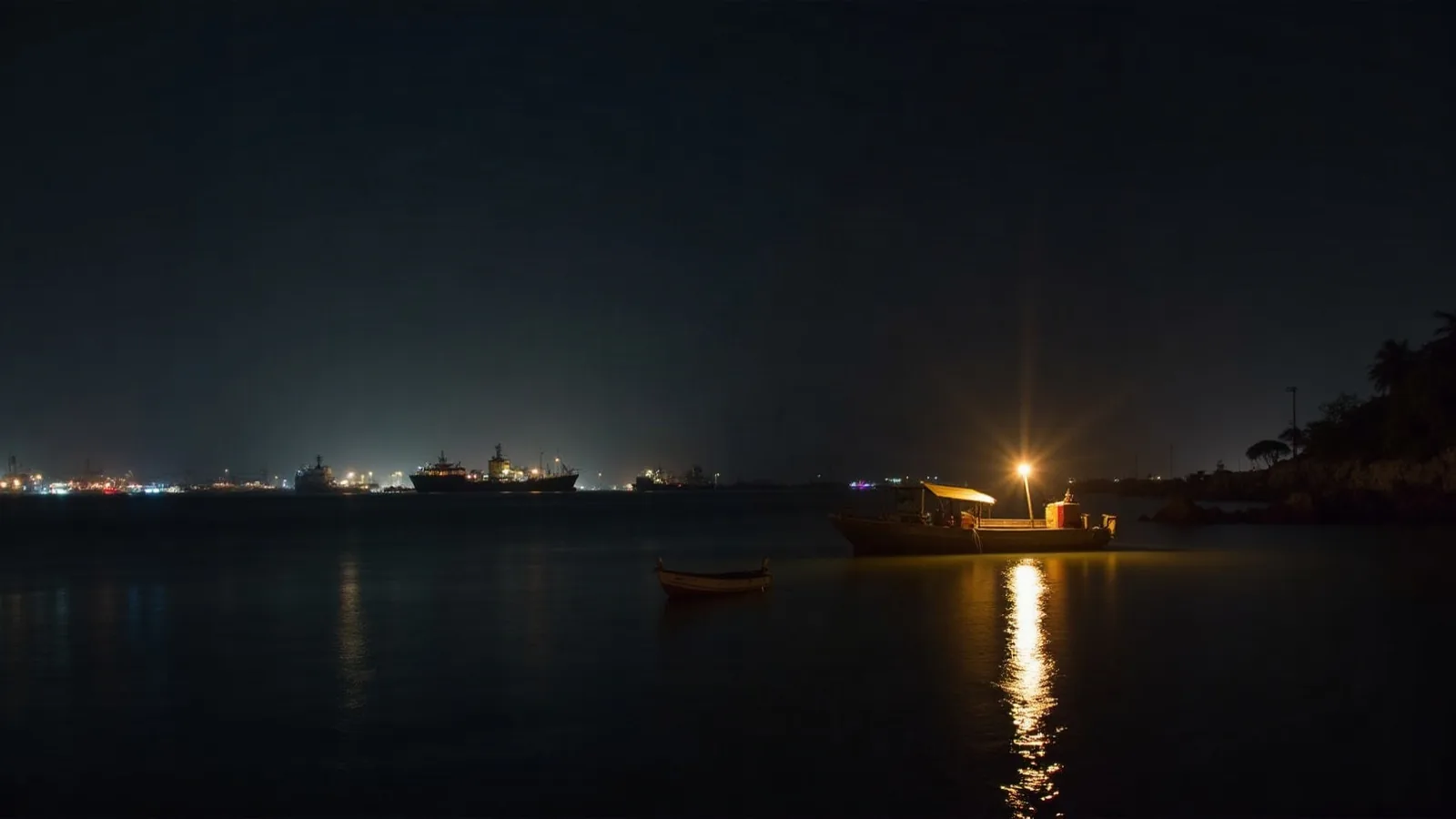
Entering Sorong harbour at night is workable for a well-prepared crew, but it is a working commercial roadstead, not a lit marina fairway: expect ferry and cargo movements at all hours, fishing platforms and small craft with weak or missing lights, and AIS coverage that shows the big traffic while hiding much of the small. The safest plan is to time landfall for first light; the second-safest is to arrive slowly, with the light picture sorted offshore and your anchoring spot chosen before you commit.
What the approach actually looks like after dark
Sorong sits on the north-western tip of the Bird’s Head, and the city lights throw a long, confusing glare across the water. The commercial port area is lit, the ferry terminal is lit, and behind both runs a shoreline of houses, warehouses and moored traders whose lights merge into the background. The practical effect: navigation lights that matter — channel marks, anchored-vessel lights, a tug’s towing lights — have to be picked out of urban clutter. Slow the boat down and give your eyes time. What looks like a shore light can turn out to be a vessel getting under way.
AIS shows the ferries, not the fishermen
The reliable AIS picture at Sorong is the commercial one: ferries running to Waisai and the islands, coastal freighters, tankers and the occasional government vessel. What AIS does not show is the layer that matters most at yacht scale — wooden fishing boats, longliners working lights, tenders crossing the roadstead, and unlit platforms. Treat AIS as one input. Keep a proper visual and radar watch, and assume every small contact is unlit until you see otherwise.
Local traffic patterns worth knowing
Ferry departures and arrivals cluster around their schedules, and the ships move briskly once under way. Fishing traffic flows out in the evening and returns through the night, often in loose groups. None of this follows a traffic-separation scheme; it follows habit and the shortest line home. The defensive posture is the same one that works in any Indonesian working port: moderate speed, early and obvious course changes, and no assumption that the other vessel has seen you.
Anchoring in the dark without regret
Choosing an anchoring spot at night in an unfamiliar roadstead is where most avoidable trouble starts. Depths shelve unevenly, holding varies, and what looks like clear water on the plotter can be someone’s habitual mooring ground. Pick a conservative spot well clear of the wharf approaches and ferry lanes, anchor with generous scope, and accept that you may re-anchor in daylight. The realistic options — and their trade-offs in daylight — are laid out on our berthing and anchorage reality page, which is worth reading before the passage, not after it.
Why formalities cannot start at night
Indonesia’s four-step clearance sequence — quarantine, immigration, customs, harbourmaster — runs on office hours. A night arrival therefore buys you nothing administratively: the yellow flag goes up, the crew stays aboard, and the first authority visit happens next morning. Skippers who plan around this arrive at dawn instead, dropping anchor as offices open and compressing the whole first day. The full sequence and its timing realities are on the Sorong gateway guide.
Weather and light: the practical windows
This close to the equator, darkness falls fast and reliably around six in the evening, year-round. There is no long twilight to stretch an approach. If your passage plan has you closing the coast at 1900, you are committing to a full night entry, not a dusk one. Squalls, when they come, tend to be sharp and short; radar earns its keep in telling a rain cell from a landmass, and the monthly sea-state picture tells you which season loads the dice. Building slack into the passage so you can slow down and arrive at 0530 is usually less costly — in fuel, nerves and risk — than pushing to arrive at midnight.
How the desk helps a night or dawn arrival
Coordination, honestly framed: we do not operate a pilot service, and no yacht is obliged to use us. What the desk does arrange is practical — your ETA pre-advised to the relevant offices so the morning sequence is queued, a local boat staged to meet you at a waypoint and lead you in if you want one, and fuel, water and provisioning booked against your actual arrival rather than a guess. For a first Indonesian landfall after a long passage, that package turns a tense night into a managed one. Scope and USD structure come the same working day you message.
The short version for the passage plan
Aim for first light. If you must enter at night: sort the light picture offshore, distrust AIS as a complete traffic feed, anchor conservatively and clear of the working lanes, and expect formalities to begin next morning. Sorong rewards the unhurried arrival — the port has seen every kind of landfall, and the ones that go wrong are almost always the ones that were rushed.
Frequently Asked Questions
Is it safe to enter Sorong harbour at night?
It is done routinely by ferries, traders and fishing vessels, but a first-time yacht arrival is easier and safer in daylight. If your passage timing forces a night approach, slow down offshore, sort the light picture early, and treat every unlit contact as moving until proven otherwise.
Does Sorong have working leading lights and buoyage?
The commercial port approach carries navigational lighting, but do not expect a fully lit, IALA-perfect picture everywhere. Cross-check every visual mark against radar and the chart, and give moored and anchored traffic a wide margin.
Will anyone answer VHF at night?
Port traffic and pilot channels are monitored for commercial movements, but response to a small yacht can be slow outside working hours. Announce your intentions anyway, and have the desk pre-advise your ETA so your arrival is expected rather than a surprise.
Can clearance start at night?
No — the CIQP offices work daytime hours. A night arrival means anchoring clear of traffic and starting formalities in the morning, which is why many skippers time their landfall for first light instead.
Can you arrange a local boat to meet us?
Yes. For night or dawn arrivals the desk can stage a local boat familiar with the roadstead to meet you at an agreed waypoint and lead you to a sensible anchoring spot — a coordination service, quoted plainly in USD.
Send this first
LOA and flag, ETA Sorong, last port, crew and guest count. The desk answers with the sequence, not a brochure.
WhatsApp the desk