Journal · field notes from the gateway
Market Runs for Yacht Galleys in Sorong
Sorong’s markets can genuinely feed a yacht galley: daily-landed fish, honest tropical produce, staples in volume, and town supermarkets for the packaged layer. What the city cannot do…
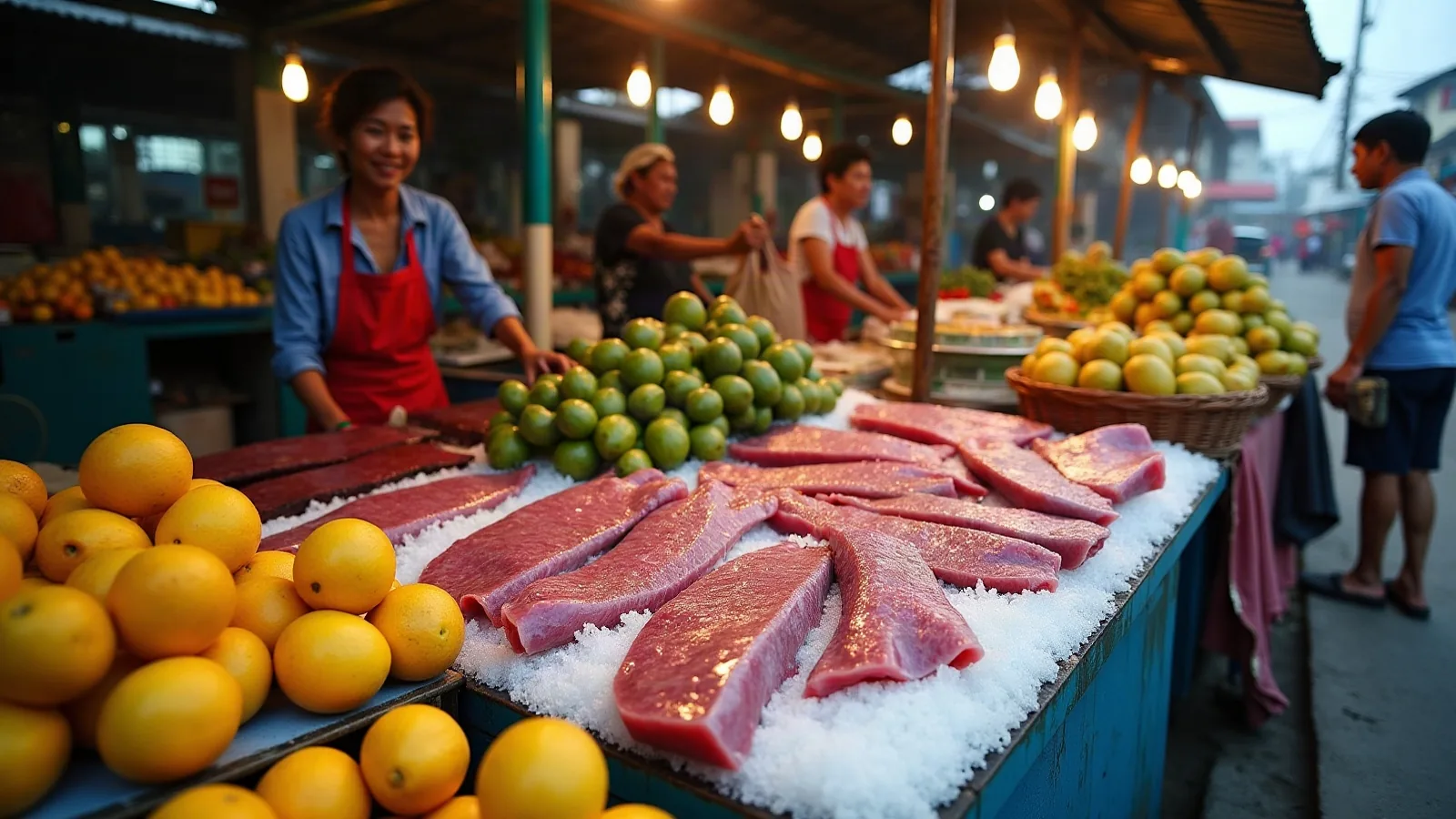
Sorong’s markets can genuinely feed a yacht galley: daily-landed fish, honest tropical produce, staples in volume, and town supermarkets for the packaged layer. What the city cannot do is impersonate a Mediterranean provisioning port — the specialty imported layer flies in from Jakarta or Makassar with lead time and freight attached. A chef who splits the list into those two lanes, and stages each lane properly, eats well all the way through Raja Ampat.
The fish first, because it is the headline
The fish landing is where Sorong outclasses fancier ports: tuna and other pelagics, reef species, squid in season, bought within hours of the boat that caught them. Prices are honest and the quality argument is made on the slab in front of you. The discipline is timing — early morning for the best of the landing — and cold chain: buy last, ice immediately, and get it aboard fast. A galley that builds menus around what the landing offers, rather than forcing the landing to match a menu, wins every time.
Produce: variety with a seasonal pulse
The produce market runs deep on tropical staples — banana varieties, papaya, pineapple, mango in season, greens, aubergines, chillies, shallots, ginger, limes — and thinner on temperate-climate items that ride in by ship and show it. Everything has a seasonal and shipment pulse: what was abundant on Tuesday may be scarce on Friday. The working answer is flexibility in the menu and a relationship with regular sellers, both of which improve visibly with repeat visits.
Staples, dry goods and the supermarket layer
Rice, flour, sugar, oil, canned goods, noodles, coffee: available in any quantity a galley could want, at Indonesian town prices. The supermarkets and mini-markets add packaged sauces, snacks, soft drinks, UHT milk and household consumables. For a crew mess, this layer alone runs a happy ship for weeks. Boat-scale volume is where staging matters — cases and sacks want a vehicle, a wharf window or a tender arrangement, not a taxi.
The flown-in lane: honest about lead time
Specific cheeses, particular cuts of meat, wine and spirits, specialty dietary items: this layer exists in Jakarta and Makassar and reaches Sorong by scheduled air freight. It arrives reliably when ordered with a week or more of lead time, and expensively or not at all when ordered late. The desk quotes this lane separately and honestly — freight is a real cost, and pretending otherwise just moves the surprise to the invoice. The full lead-time logic across all provisioning classes is laid out in the lead-times piece.
Water, ice and the cold chain
Galley provisioning succeeds or fails at the cold chain. Block and crushed ice are available at fishing-port scale; drinking water in gallon bottles is everywhere; and the run from market to boat is where heat does its damage. Stage the run: dry goods first and slow, chilled and fish last and fast, with the tender or vehicle actually waiting rather than being summoned. On turnaround days the desk choreographs this against the rest of the day’s landings — fuel, water, crew — so nothing queues behind anything it should not.
Doing it yourself versus staging it
Crew-run market mornings are one of the pleasures of an Indonesian port call, and nothing on this page argues against them. The desk earns its coordination fee when scale or schedule bite: a charter boarding tomorrow, forty guests’ worth of provisioning, a wharf window that opens for two hours only, or a chef who needs the flown-in lane and the local lane to land the same afternoon. Then the value is obvious: orders staged against your ETA, sellers pre-briefed, transport booked, delivery to the supply operation running alongside fuel and water rather than fighting them.
What it costs, structurally
Market goods at market cost; flown-in goods at cost plus stated freight; coordination and delivery as a named USD line — the same no-hidden-lines structure the desk applies to everything, detailed on the cost framework overview. Chefs see the split before committing and move items between lanes with the numbers visible. Most discover the local lane covers more of the menu than they assumed, which is the most economical good news in provisioning.
The short version for the galley plan
Trust the fish, respect the seasonal pulse, buy staples locally without hesitation, and give the imported layer the lead time it genuinely needs. Send the desk your list split into lanes — or send the unsorted list and let us split it — with ETA and boarding dates, and the staged answer comes back in USD the same working day.
Frequently Asked Questions
What can a yacht galley actually buy fresh in Sorong?
Reef and pelagic fish landed daily, tropical fruit and vegetables in honest variety, rice and staples in any quantity, eggs, and basic dry goods. Quality is genuine; consistency is seasonal and shipment-dependent, which is why chefs shop with flexibility built into the menu.
Is there anything resembling a supermarket?
Yes — town supermarkets and mini-markets carry packaged goods, drinks, dairy substitutes and household basics. What they cannot promise is the specialty imported layer: fine cheeses, specific cuts, wine. That layer flies in, with lead time and freight cost.
How early should provisioning orders be placed?
Local-market items: a day or two of staging works. Flown-in specialty items: a week or more, honestly quoted, because they ride scheduled freight from Jakarta or Makassar. The split is the whole game — order the import layer early and shop the local layer fresh.
Can crew do the market run themselves?
Absolutely, and many enjoy it. The desk adds value when volume is large, time is short or the galley wants delivery to the wharf or tender staged against a turnaround day — coordination in USD, not a claim that you cannot shop without us.
How is galley provisioning priced through the desk?
Item classes at market cost plus stated coordination, delivered where you need it. The structure is shown before you commit, in USD, with local-versus-flown-in lanes separated so the chef decides where the money goes.
Related reading: a practical half-day shore-leave plan for crews.
Send this first
LOA and flag, ETA Sorong, last port, crew and guest count. The desk answers with the sequence, not a brochure.
WhatsApp the desk