Journal · field notes from the gateway
The Vessel Declaration & Temporary Import at Sorong
The vessel declaration is the customs half of clearing a foreign yacht into Indonesia at Sorong: your boat is admitted temporarily — duty unpaid — for a defined…
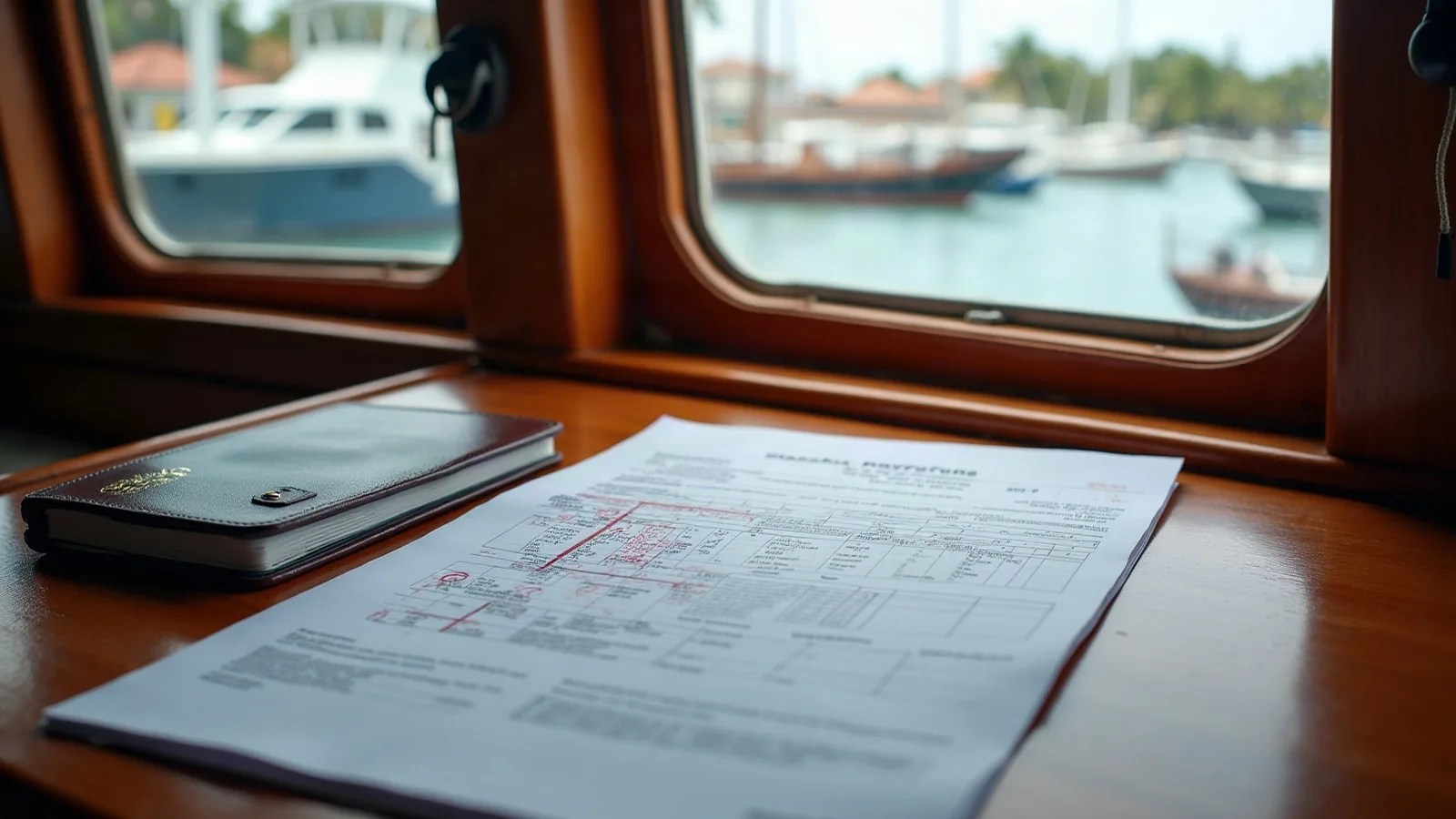
The vessel declaration is the customs half of clearing a foreign yacht into Indonesia at Sorong: your boat is admitted temporarily — duty unpaid — for a defined period, on the strength of documents you lodge with Bea Cukai on arrival. Done cleanly it is routine paperwork. Done sloppily it is the step most likely to stall a clearance, because customs works on document consistency, and inconsistencies surface here first.
Temporary admission, in plain language
Indonesia does not expect a visiting yacht to pay import duty, any more than it expects a tourist to pay duty on their own camera. The mechanism is temporary admission: the vessel enters under a declaration, exists in Indonesian waters for a bounded period, and leaves. The declaration is what bounds it. It records the vessel, its value class, its purpose — private pleasure, in the standard case — and the period granted. Sail out before the period ends, or extend it properly, and the duty question never arises.
Where it sits in the Sorong sequence
Clearance at Sorong runs quarantine first, then immigration, then customs, then the harbourmaster. By the time you reach the customs desk, your crew’s status is already resolved — which matters, because the customs officer reads your crew list against the immigration record. (Why the health authority goes first at all is its own story — see why quarantine opens the sequence.) The vessel declaration is processed in this third step, and the harbourmaster’s port clearance in step four generally waits on it. The full order, with what each office actually checks, is on our Sorong clearance walkthrough.
The documents that carry the declaration
Registration certificate matching the name and flag painted on the boat. Clearance from your last foreign port. A crew list identical — not similar, identical — to the one immigration stamped an hour earlier. Declarations of what is aboard that would interest customs anywhere: alcohol quantities, drone equipment, quantities of medicines, weapons if any (declare, always). None of this is exotic. All of it must agree with itself. An officer who finds one mismatch will look for a second, and the afternoon disappears.
The clock, and whose clock it is
The temporary admission period is the vessel’s clock. Your visa is the crew’s clock. They run separately, expire separately, and are extended through different offices — a distinction that catches crews who assume renewing a visa renews the boat’s status. It does not. Track both dates from day one, and plan the vessel’s exit or extension around the admission period, not around the crew’s travel plans. Which office handles what, Sorong-side, is mapped on the permits and regulations briefing.
What goes wrong in practice
Three patterns account for most customs friction at Sorong. First, document mismatch — a crew member on the list who flew home from the last port, a registration renewal that changed the vessel’s recorded details. Second, casual declarations — the case of wine that became four cases when the officer looked. Third, expired admission periods discovered at departure, which converts a routine outward clearance into a problem with real teeth. Every one of these is preventable before arrival, which is precisely when we prevent them.
Commercial use: the line you must not blur
Temporary admission for a private yacht assumes private use. Chartering — taking paying guests — is a different regime entirely, with its own licensing and its own tax logic, and the declaration you signed does not cover it. The desk states this plainly because the temptation is real and the consequences are not small: a vessel admitted as private and caught operating commercially has a customs problem, not a paperwork problem. If your programme involves commercial operation, say so before arrival and let the structure be set up honestly.
Extensions and the exit
Extending temporary admission is a process, not a favour — it has its own lead time and its own documentation, and it goes better initiated early than begged late. The exit is the mirror of the entry: outward customs clearance closes the declaration, the harbourmaster issues the sailing permit, and the vessel’s Indonesian file ends tidily. Costs across the whole sequence — official items passed through at cost, desk fees in USD — follow the structure on the USD fee structure page.
How the desk handles it
Before your ETA we collect the document set digitally and read it the way the officer will — names against names, numbers against numbers. Discrepancies get fixed while they are still affordable. On the day, we schedule and attend the customs visit, and the declaration is lodged with everything agreeing with everything. That is the entire trick. There is no shortcut through Bea Cukai, and anyone selling one is selling trouble; there is only paperwork that agrees with itself, presented by people the office sees every week.
Frequently Asked Questions
What is the vessel declaration for a yacht entering Indonesia?
It is the customs instrument by which a foreign-flagged yacht is admitted temporarily without paying import duty — the vessel is declared to Bea Cukai on arrival, granted a temporary admission period, and must be exported (sailed out) or extended before that period ends.
Do I pay import duty on my yacht at Sorong?
Not under temporary admission used as intended. Duty and taxes become the issue only if the vessel overstays, is transferred, or is used commercially outside the declared purpose — which is exactly what the declaration paperwork exists to prevent.
How long can the yacht stay in Indonesia?
The temporary admission runs for a defined period with extension routes, and the clock is separate from your crew’s immigration stay. Confirm the current period at entry rather than relying on a forum post — the regime has changed more than once.
What documents does customs want to see?
Registration, prior port clearance, crew list consistent with the immigration record, and honest declarations of stores on board. Mismatches between documents are the single biggest cause of slow customs processing.
Can your desk handle the declaration for us?
We prepare and accompany — pre-lodging details, checking document consistency before the officer sees them, and attending the visit. The declaration is the master’s; the desk’s job is to make sure it goes through cleanly, quoted in USD as part of clearance support.
Related reading: who actually signs your SPB — Syahbandar and KSOP explained.
Send this first
LOA and flag, ETA Sorong, last port, crew and guest count. The desk answers with the sequence, not a brochure.
WhatsApp the desk