Journal · field notes from the gateway
Sorong to Raja Ampat by Sea: Seasons and Routes
When to cruise Raja Ampat from Sorong and how to plan the passage: monsoon regimes, shoulder seasons, tidal streams through the straits, and the route north or south around Batanta.
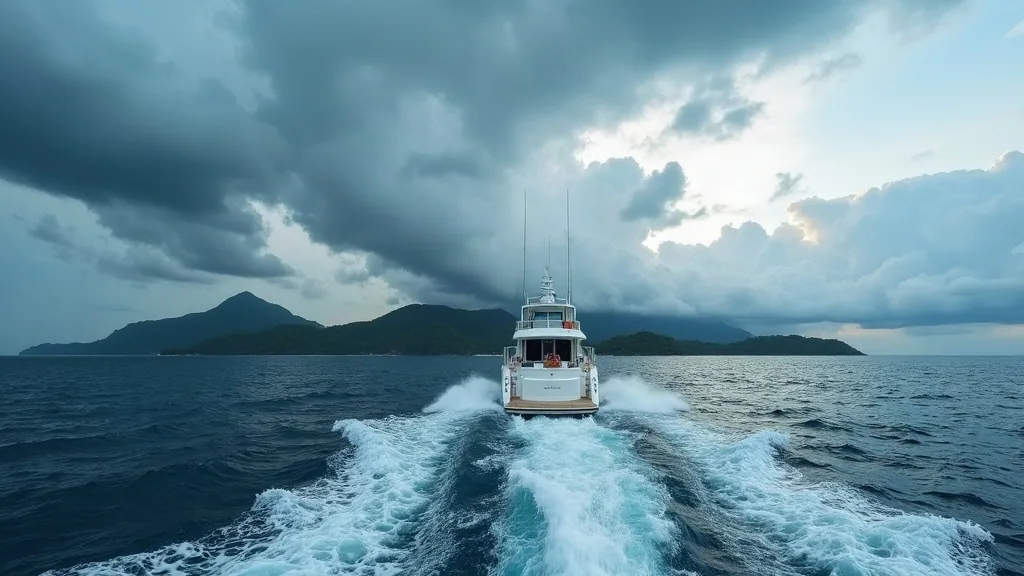
Raja Ampat can be cruised year-round, but it cannot be cruised the same way year-round. Two monsoon regimes swap the exposed coasts twice a year, the shoulder months between them are frequently the most settled, and the tidal streams through the straits matter more to your passage plan than the wind does. Sixty nautical miles separate Sorong from Waisai, and how you cover them depends entirely on the month and the hour.
The two seasons, plainly
North-west season: roughly December to March
Weather arrives from the north-west. North-facing and north-western anchorages become uncomfortable or untenable, and northern Waigeo and the Wayag area take the brunt of it. Southern coasts and southern Misool are correspondingly sheltered. Rainfall is higher and squalls are common, which affects visibility on passage more than it affects the diving. Many liveaboard programmes run through this period precisely because the southern grounds work well.
South-east season: roughly June to September
The pattern reverses. Swell reaches southern coasts and southern Misool becomes exposed, sometimes markedly so, while northern Waigeo and the Wayag lagoons become the sheltered option. Winds are typically steadier and drier than in the north-west season. Some operators reduce or pause Raja Ampat programmes in the deep south-east months, though this varies by vessel and by itinerary.
The shoulders: April–May and October–November
These transitional periods are often the most settled of the year, with lighter winds and calmer water in both hemispheres of the archipelago. They are also, unsurprisingly, popular. If your itinerary has flexibility, the shoulders are where an unhurried, wide-ranging Raja Ampat cruise fits most comfortably.
All of the above is a generalisation. Any given year can deviate substantially, and a monsoon that arrives early or lingers late rearranges the plan. Treat seasonal guidance as a planning framework and current forecasts as the operational input.
Currents: the factor that actually governs the passage
The straits of Raja Ampat run hard. That tidal exchange is why the reefs are as productive as they are, and it is also why passage timing here is a genuine navigational discipline rather than an afterthought. A vessel that enters a narrow passage against a full stream can find its speed over ground reduced to something embarrassing, and a tender operating in the same conditions can find itself in real difficulty. Standing waves, overfalls and strong eddies occur in the constrictions.
The practical rules: plan strait transits around slack or a favourable stream, brief tender operations explicitly on current conditions at the site, and do not let guests swim or snorkel off the vessel in a passage without checking the stream first. This is also why anchoring technique matters — a vessel lying to a current rather than to the wind behaves differently from what crews expect, and swinging room must be assessed accordingly. Anchoring constraints are covered on our permits and regulations page, because in Raja Ampat where you may anchor is a legal question as well as a seamanship one.
Route options from Sorong
The Dampier Strait route to Waisai
The direct and most-used route runs north-west from Sorong across to the Dampier Strait area between Batanta and Waigeo, with Waisai on the southern coast of Waigeo. Roughly sixty nautical miles, which is a comfortable overnight passage for a displacement liveaboard leaving Sorong in the evening and arriving at first light, or a daylight run for anything faster. The Dampier Strait itself contains many of the best-known dive sites, and it also carries the strongest streams — plan the transit, do not drift into it.
South of Batanta and Salawati
An alternative track runs west along the south of Salawati and Batanta before turning north. It is longer, and it is the sensible option when the north-west season makes the direct northern approach uncomfortable, or when an itinerary is heading for Misool rather than Waigeo.
Direct to Misool
Southern Misool lies considerably further from Sorong than Waisai does — a genuine overnight passage in open water rather than a hop. It is a superb destination and it should be treated as a proper passage leg with weather routing, not as an extension of a day trip. In the south-east season, exposure on the southern side is the governing factor.
Practical passage preparation at Sorong
Whatever route you take, leave Sorong with full tanks, clean fuel filters and the vessel properly stored. There is no fuel dock, no chandlery and no technical support of any depth once you are in the archipelago; a problem that is a two-hour job alongside at Sorong becomes a two-day problem at anchor in Waigeo. Take on fuel and water before you go, not after — see bunkering, water and provisioning — and use the alongside window for preventive work rather than saving it for later.
Communications coverage is patchy across the archipelago. Satellite communications are a practical necessity for any vessel carrying guests, both for weather updates and for the medical and evacuation pathway that every operator should have written down before the season starts.
Choosing your window
If you can choose freely: the shoulder months, running the Dampier Strait and northern Waigeo, with Misool added if the weather is settled. If you are in the north-west season: favour the south, accept the rain, and time the strait transits carefully. If you are in the south-east season: favour the north, watch the southern exposure, and enjoy the drier air. In every case, plan the stream, not just the day.
For itinerary compliance, anchorage planning and the entry contributions that everyone aboard needs before entering the park, start with our permits page and then talk to the desk.
Frequently Asked Questions
What is the best season to cruise Raja Ampat from Sorong?
The shoulder months of April–May and October–November are often the most settled. The north-west season from December to March favours southern grounds and southern Misool, while the south-east season from June to September favours northern Waigeo and the Wayag area. Any given year can deviate substantially.
How long does the passage from Sorong to Waisai take?
Waisai lies roughly sixty nautical miles from Sorong. A displacement liveaboard typically leaves in the evening and arrives at first light, while faster vessels make it a daylight run. Fast passenger ferries carrying guests cover the same crossing in about two hours.
Why do currents matter so much in Raja Ampat?
The straits between the major islands run hard, producing standing waves, overfalls and strong eddies in the constrictions. Passage transits should be planned around slack or a favourable stream, tender operations briefed explicitly on current, and swimming off the vessel in a passage checked before it starts.
Should a yacht refuel before leaving Sorong for Raja Ampat?
Yes. There is no fuel dock, chandlery or meaningful technical support once inside the archipelago. Leave Sorong with full tanks, clean filters and the vessel properly stored, and use the alongside window for preventive maintenance rather than deferring it.
Send this first
LOA and flag, ETA Sorong, last port, crew and guest count. The desk answers with the sequence, not a brochure.
WhatsApp the desk