Journal · field notes from the gateway
Anchorage and Berthing for Yachts at Sorong
Practical guidance on where yachts anchor and berth at Sorong: holding ground, traffic, fouled seabed, commercial quay realities, draft constraints and night-time precautions.
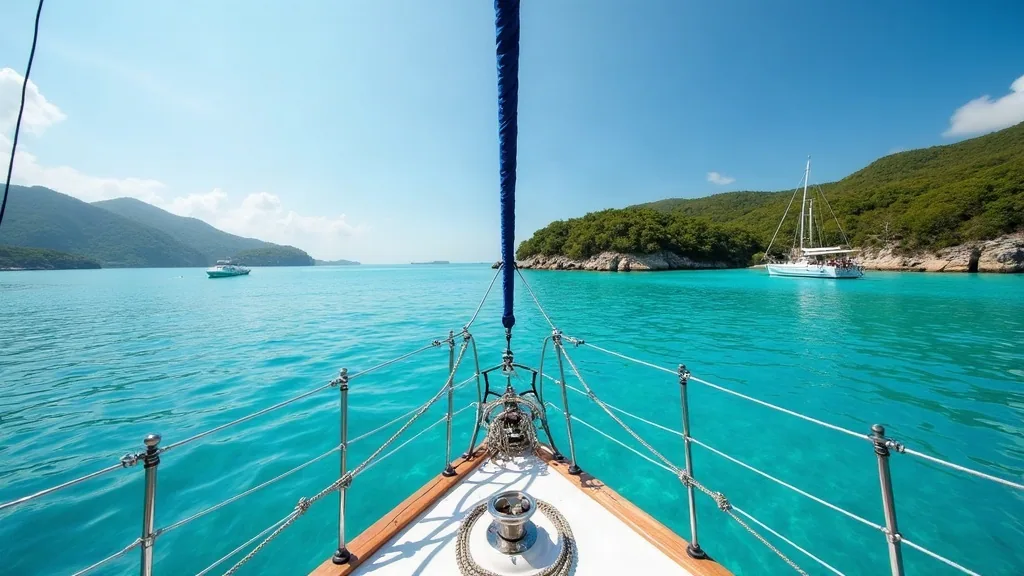
Sorong offers a working commercial harbour and open roadstead anchorages, and nothing designed for yachts. That is not a criticism of the port — it does what it was built for extremely well — but it means a visiting yacht has to make three decisions consciously: where to put the anchor, whether alongside is worth pursuing at all, and how to keep the vessel safe in a port where traffic runs around the clock.
The roadstead: anchoring off the town
The pragmatic default for a visiting yacht is to anchor off the city within tender range of the port offices. It puts you close to clearance, close to provisioning, and close to the fuel and water logistics that a call revolves around. The seabed in the roads is generally mud and sand and holding is workable, but there are two caveats that matter.
The first is fouling. This has been a working port for a very long time and the bottom carries the evidence: abandoned ground tackle, old moorings, cable and general debris. A trip line on the anchor is not paranoia here, it is basic seamanship, and a vessel that fouls without one in a busy roadstead has turned a nuisance into a diving job.
The second is traffic and wash. Ferries, fishing vessels, tugs, barges and cargo movements run through the approaches at all hours. Wash is constant, some of it substantial, and the movement pattern does not stop at night. An anchor watch is not optional. Deck lighting and a properly displayed anchor light matter more here than in an empty bay, and a tender left in the water alongside overnight will take a beating.
The islands: quieter water, longer tender run
Vessels planning more than a night in the area, and most vessels above about thirty metres, commonly move out to the lee of the islands off the city. The trade is straightforward: calmer water, far less traffic, better sleep and a safer platform for tender operations, in exchange for a longer run to town and a dependency on that tender in weather. For a superyacht supporting a guest programme, or a liveaboard with a day or two between charters, this is usually the better answer. We plan calls around it routinely — see superyacht support.
Alongside: what it really involves
Alongside berths at Sorong are commercial. That means quay walls with heavy fendering designed for steel ships, bollards sized accordingly, a working surface with vehicle traffic, and neighbours whose operations are noisy and continuous. A yacht going alongside there needs:
- Large fenders, and ideally fender boards or tyre fenders, to bridge the gaps between the quay’s protruding fenders
- Long lines with generous scope to absorb tidal range and the surge from passing traffic
- A gangway suitable for a high, industrial quay face — the quay is not at your boarding-gate height
- A watchman at the gangway while alongside in a working port
Alongside time is allocated by the operator against the movements of commercial vessels, which pay by the metre and book in advance. It is granted in hours, not days, and it can move at short notice when a ship’s schedule changes. It is excellent for a bunkering and storing window and it is a poor place to leave a yacht sitting. Treat any alongside slot as a working window with a defined start and end, and plan fuel, water, stores and waste removal into it deliberately — which is exactly how we schedule it on the berth and anchorage service.
Depth, draft and the limits of the chart
Charted depths across eastern Indonesia are not uniformly modern, and inner harbour areas shoal. Deep-draft vessels should treat published soundings as indicative rather than authoritative, keep a hand-held or forward-looking sounder in use on the approach, and arrange a pilot or a local lead boat rather than trusting an electronic chart into unfamiliar shallow water. This is not a Sorong-specific caution — it applies across the region — but it bites here because the approaches carry commercial traffic that will not be manoeuvring around you.
Tidal range in the area is modest. Tidal streams in the nearby straits are not: the currents that make Raja Ampat’s reefs extraordinary run hard through the passages, and they affect approach and departure timing more than the wind does. Plan movements around the stream. Our seasons and routes article covers this in the passage-planning context.
Security and leaving the vessel
Sorong is a normal working port city with normal working port risks: opportunistic theft rather than anything dramatic. The precautions are the ordinary ones. Tenders lifted or locked at night. Outboards secured. Dive gear and deck equipment stowed rather than left rigged. A manned gangway when alongside. A watch arrangement if the vessel is to be left at anchor while crew are ashore or flying out.
Yachts do lie at Sorong for extended periods and it can be done safely, but leaving a vessel unattended at anchor in a busy commercial roadstead while the whole crew flies home is not something we would recommend without a proper watchkeeping arrangement in place. If a vessel needs to be laid up between charters, that is a conversation to have in advance rather than a decision to take at the airport.
The practical summary
Anchor off the town for a short working call, close to clearance and logistics, with a trip line and an anchor watch. Move to the island lee for anything longer or for guest comfort. Pursue an alongside slot only when you have a defined reason — a bunkering lift, a stores load, a technical job — and treat it as a timed working window rather than a berth. Respect the traffic, respect the stream, and do not trust the chart’s last soundings in the shallows.
If you want the berth or anchorage arranged and the call scheduled around it, that is exactly what the agency service does. Send LOA, beam, draft and dates, and we will tell you honestly which of the three options is realistic for your vessel.
Frequently Asked Questions
Where is the best place to anchor at Sorong?
Most visiting yachts anchor off the town within tender range of the port offices for short working calls, and move to the lee of the offshore islands for longer stays or guest comfort. Holding is generally workable in mud and sand, but the seabed is fouled in places and a trip line is advisable.
Do I need an anchor watch at Sorong?
Yes. Ferries, fishing vessels, tugs, barges and cargo movements run through the approaches around the clock, wash is constant and some of it substantial, and the movement pattern does not stop at night. An anchor watch and a properly displayed anchor light are essential.
What does a yacht need to go alongside a commercial quay in Sorong?
Large fenders and ideally fender boards or tyre fenders, long lines with generous scope for tidal range and passing surge, a gangway suitable for a high industrial quay face, and a watchman at the gangway while alongside in a working port.
Can I trust charted depths around Sorong?
Charted depths across eastern Indonesia are not uniformly modern and inner harbour areas shoal. Treat published soundings as indicative, keep a sounder in use on approach, and arrange a pilot or local lead boat for deep-draft vessels rather than trusting an electronic chart into unfamiliar shallows.
Send this first
LOA and flag, ETA Sorong, last port, crew and guest count. The desk answers with the sequence, not a brochure.
WhatsApp the desk