Journal · field notes from the gateway
Fresh Water in Sorong: Tank Fills Without Regret
Fresh water in Sorong is a logistics product, not a tap: it reaches yachts by hose during a wharf window or by tank-boat run to the anchorage, and…
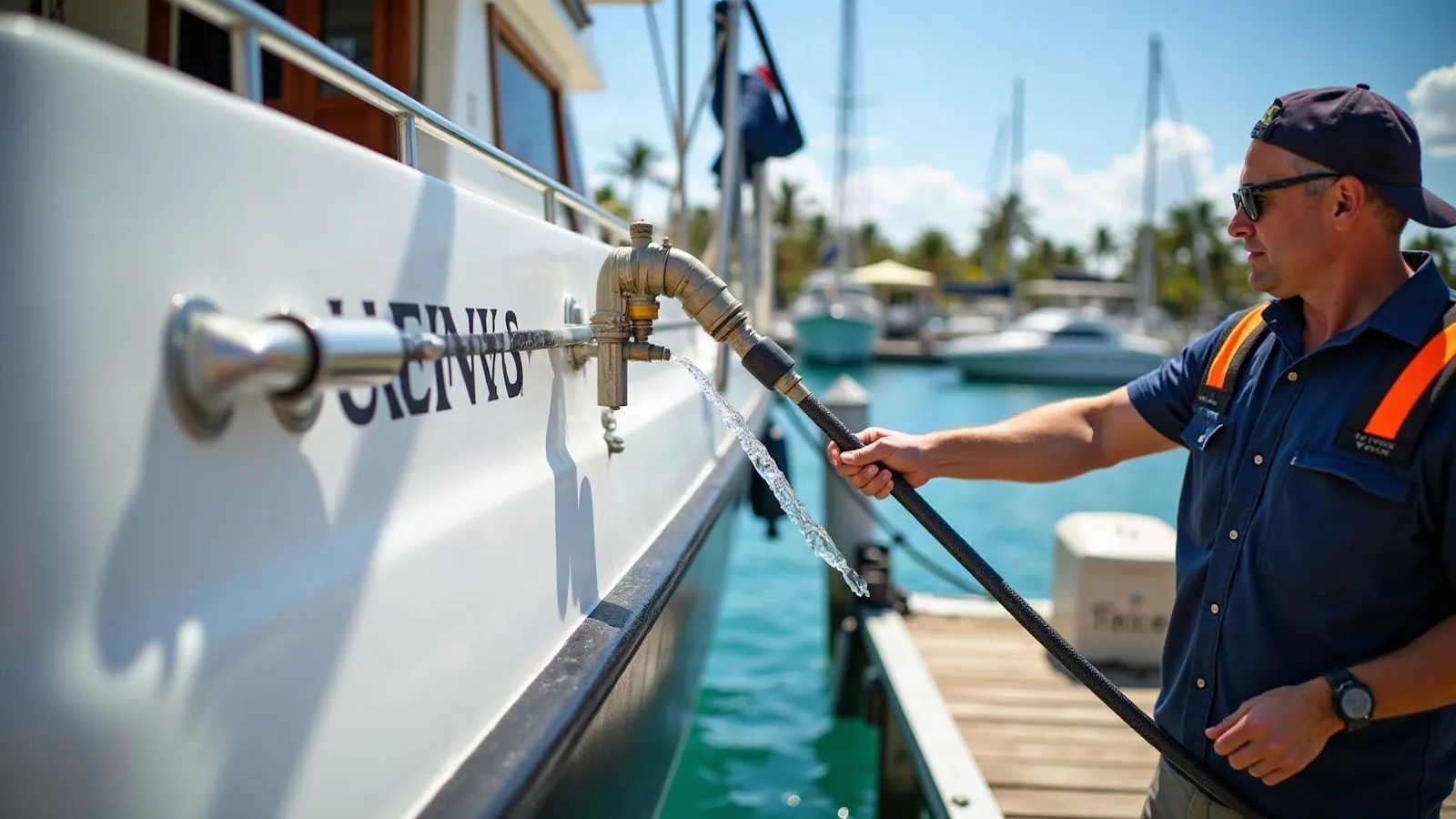
Fresh water in Sorong is a logistics product, not a tap: it reaches yachts by hose during a wharf window or by tank-boat run to the anchorage, and its quality is workable-but-treat-it — fine for tanks and washing, deserving filtration and treatment before anyone drinks it. The vessels that get water right here run a simple split: city water for volume in port, watermaker offshore where intakes are clean, and a drinking-water discipline that never depends on trust alone.
Where the water comes from
Sorong’s supply mixes municipal sources and private delivery operations, with quality that varies by source, season and the pipe it last travelled through. This is normal for a working Indonesian port and no scandal — but it means ‘is the water good?’ has no single answer, and anyone giving you one is simplifying. The desk’s practice is source-honesty: we route orders to suppliers whose water we would take ourselves, state what we know about a given delivery, and never certify what varies beyond anyone’s control.
Delivery mode one: alongside by hose
During a commercial wharf window, water arrives the easy way — a hose, decent flow, volume metered or tallied by time. The constraints are the window itself and hose hygiene: ask for a clean run-through before the nozzle goes anywhere near your deck fill, and put your own filter in the path regardless. Wharf windows being the scarce resource they are, water usually shares one with fuel and provisioning on a staged day — the choreography behind the supply operation page.
Delivery mode two: the tank boat
At anchor, water comes to you: a local boat with tanks and a pump, arranged with lead time, transferring alongside in workable sea state. Flow is slower, handling matters more, and the same hygiene rules apply doubled — the tank boat’s tanks are part of your supply chain now. For serious volume at anchor the arithmetic sometimes favours moving the yacht to a wharf window instead; the desk prices both honestly and lets the master choose with numbers visible.
The fill discipline: filter, treat, verify
Three habits cover almost everything. Filter at the deck fill — a sediment cartridge at minimum, carbon if you carry it — because whatever the source, the last hundred metres of hose is unaudited. Treat the tanks: chlorination to your vessel’s protocol, or the treatment regime your builder specified, done every fill in this climate rather than when someone remembers. Verify: test strips cost pennies and settle arguments instantly. None of this is exotic; all of it is the difference between water you manage and water you gamble on.
Drinking water: its own discipline
Tank water managed as above washes dishes, runs showers and rinses dive kit indefinitely. Drinking is a separate standard: bottled gallon water is affordable and everywhere in town, undersink filtration earns its keep, and the watermaker — run offshore, not in the roadstead — remains the gold standard for guest operations. Working-port harbour water is exactly what a membrane manufacturer imagined when writing the warranty exclusions; make water where the sea is clean and take city water where it is not. Galley provisioning follows the same logic — see the galley market guide for the food half.
Tanks themselves: the forgotten variable
Water quality conversations obsess over the source and ignore the destination. Tanks that have run years without inspection, breathers that admit the tropics, dead legs in plumbing where water sits warm and still — these degrade good water faster than a mediocre source degrades a clean system. A tank-cleaning cycle during a layup or turnaround, and a plumbing walk-through with honest eyes, buys more drinking-water safety than any amount of supplier interrogation. The turnaround service day is the natural moment for it.
Ordering: volume, mode, timing
Water orders stage like fuel orders: volume, delivery mode, and a timing window tied to your ETA or your wharf slot. Lead time is modest but real — the tank boat and the hose window both book, and same-hour water is luck rather than planning. Send the request with your other supply lines and it lands on the same staged day, priced in USD with delivery named, under the same structure-first rules as everything in the supply cost framework.
The short version
Take city water for volume and treat it like the industrial product it is: filtered in, treated aboard, verified at low cost. Keep drinking water on its own standard. Run the watermaker offshore, not in the harbour. Inspect your own tanks as seriously as you interrogate suppliers. And order water as logistics — volume, mode, window — through one message to the desk, so it arrives on the day everything else does, without regret attached.
Frequently Asked Questions
Is Sorong’s water safe to put in yacht tanks?
City and delivered water here is workable ballast for washing and systems; treat it before trusting it for drinking. The honest practice: fill through a filter, treat the tanks, and keep drinking water on its own discipline — bottled, filtered or watermaker.
How does water actually get to the boat?
Alongside a wharf by hose during a working window, or out to anchor by tank boat arrangement. Both are staged deliveries with lead time, not taps you turn on demand.
Should we just run the watermaker instead?
Not in the harbour — roadstead water is working-port water, and membranes deserve better. Take city water for volume in port, and make water offshore where the intake is clean. That split is standard practice here.
What treatment do you recommend for tank fills?
Filter at the deck fill (sediment at minimum), chlorinate or treat to your vessel’s protocol, and let the tanks work. Test strips are affordable; complacency is not. We state the practice honestly rather than certifying what varies by source.
What does water cost through the desk?
Supplier cost plus staged delivery, quoted in USD before you commit — same structure logic as fuel. Volume, delivery mode and timing set the price; there are no per-litre mysteries.
Send this first
LOA and flag, ETA Sorong, last port, crew and guest count. The desk answers with the sequence, not a brochure.
WhatsApp the desk