Journal · field notes from the gateway
Bunkering in Sorong: Truck, Barge or Drum
Fuel comes aboard in Sorong three ways: by truck to a wharf you are lying alongside, by arranged barge for volume at anchor, or by drums ferried out…
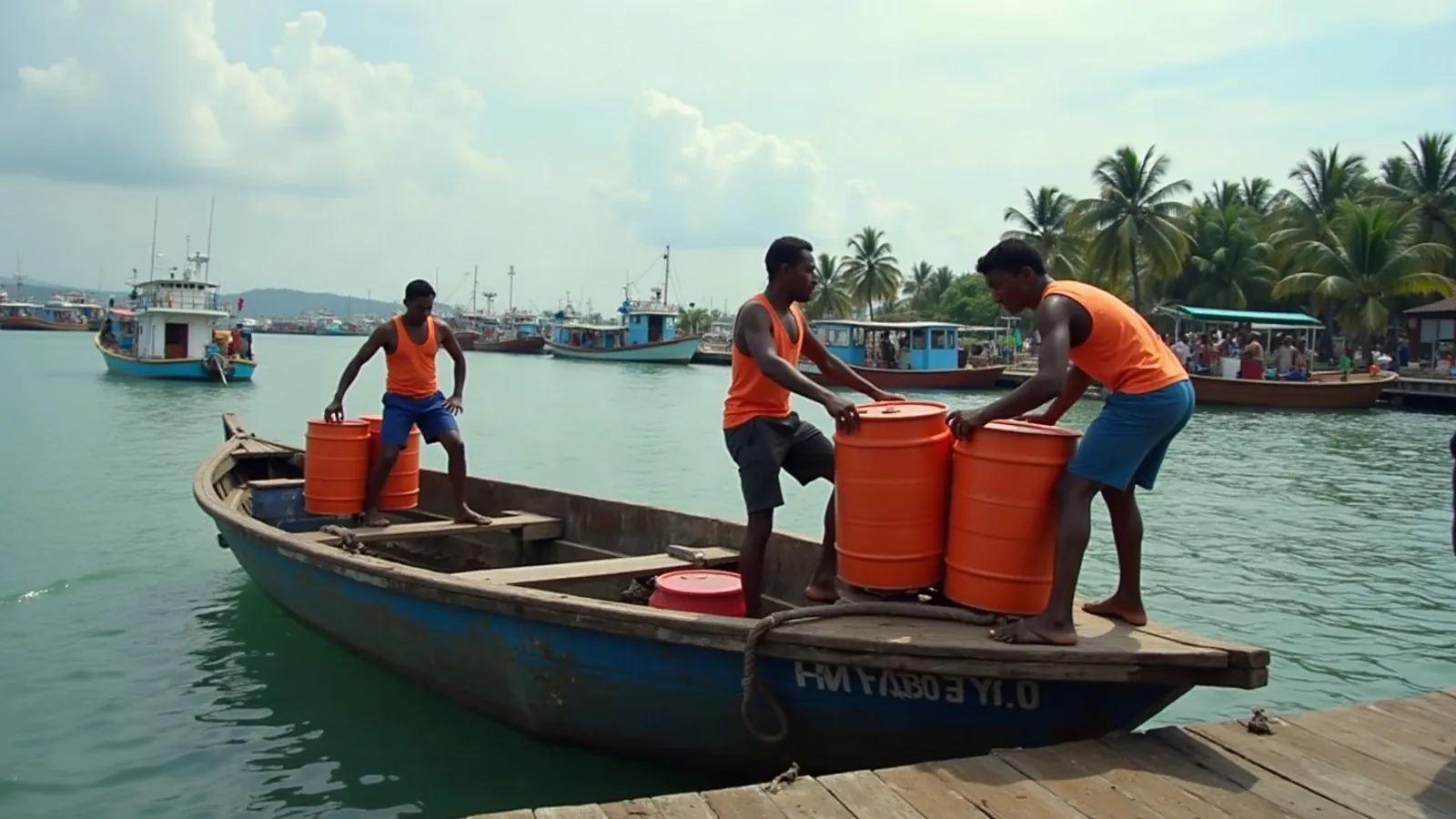
Fuel comes aboard in Sorong three ways: by truck to a wharf you are lying alongside, by arranged barge for volume at anchor, or by drums ferried out in a local boat. Each mode has a real cost, a real lead time and a real quality discipline. Choosing the right one for your volume and berth situation — and ordering it against your ETA rather than after arrival — is most of what separates a smooth bunkering from a wasted day.
Why the mode question comes first
Skippers ask about price per litre; the port answers in logistics. Sorong has no yacht fuel dock — the honesty line that runs through this whole site applies here too — so every litre arrives by an arrangement, and the arrangement is the cost driver. A thousand litres by drum is a different operation from a thousand litres by truck, and twenty thousand litres is a different operation again. Fix the mode first and the price conversation becomes honest.
Truck-to-wharf: the volume workhorse
When a yacht can take a commercial wharf window, a fuel truck alongside is the efficient answer: good flow rate, volume metered at the truck, minimal double handling. The constraints are the window itself — wharf time in a working port is negotiated, not assumed — and the coordination of truck slot with berth slot, which is precisely the kind of alignment the desk exists to arrange. The berth-side realities are described on the wharf-window and berth logistics page; the fuel operation books against them.
Drum supply: small volume, honest handling
Drums are how the anchored yacht fuels without moving: 200-litre drums, a local boat, a hand pump or transfer pump, and patience. The per-litre cost carries the handling; the quality discipline is yours — let drums settle, decant carefully, and filter everything through at least a funnel-filter with water separation. Done properly, drum fuelling is unglamorous and perfectly serviceable. Done in a hurry with strange drums, it is how water and sediment reach your tanks. Water quality has the same logic — see the tank-fill quality piece for the sister discipline.
Barge supply: the planned exercise
Between drum scale and tanker scale sits the arranged barge — the answer for liveaboards and superyachts taking serious volume at anchor. A barge alongside is a planned marine operation: scheduling, fendering, hose condition, sea state, and a metering arrangement everyone trusts. It is priced per case and arranged with lead time, and for larger programmes it is often paired with a turnaround day so fuel, water and provisioning land together — the pattern described on the liveaboard turnaround page.
Quality: process beats promises
No honest broker in a working Indonesian port guarantees laboratory fuel. What exists instead is process: suppliers with a track record, fuel that has settled, clean handling, and your own filtration doing its job. The desk’s role is to route orders to sources we would use ourselves and to say plainly what we know and do not know about a given supply. Yachts with polishing systems should run them; yachts without should treat funnel-filters and separator elements as consumables of the region.
Lead times and the ETA discipline
Every mode rewards notice. Truck slots book ahead; barges schedule; even drum runs go smoother staged than improvised. The pattern that works: send volume, preferred mode and ETA before you arrive, let the order be staged against your actual schedule, and let it slide gracefully when weather moves you. The pattern that fails: arrive, then start asking. In a port where wharf windows and working hours bind everything, the unstaged order waits behind every staged one.
What it costs, structurally
Fuel itself is priced by the supplier at the day’s rate; the mode adds its handling layer — drum logistics, barge case price, or wharf-window coordination. The desk quotes the whole operation in USD with the official and supplier components stated plainly, part of the five-bucket structure explained on the five-bucket cost breakdown. No hidden lines: masters compare our structure against doing it themselves and decide with the numbers visible.
Ordering through the desk
Message volume, mode preference if you have one, ETA and berth intention, and the desk returns the workable options with lead times and USD structure the same working day. If drum is smarter than barge for your volume, we say so; if the wharf window is the binding constraint, we say that too. Fuel is the least romantic part of a Raja Ampat departure and the one your engines care about most — it deserves the boring, staged, filtered treatment this page describes.
Frequently Asked Questions
What is the most economical way to take fuel in Sorong?
Per litre, truck-to-wharf is usually the most efficient once volume justifies the alongside window. Drum supply costs more per litre in handling but suits small volumes and yachts staying at anchor. The most economical overall is whichever mode matches your volume and berth reality — not the lowest headline price.
Can a yacht at anchor get fuel without coming alongside?
Yes — by drum runs in a local boat, or for serious volume by arranged barge. Both are planned exercises: drums need careful decanting and filtration; a barge needs scheduling and fendering. Neither is a same-hour impulse order.
How do I know the fuel quality is acceptable?
Trust process, not promises: known suppliers, clean drums, settled fuel, and your own filtration — a funnel-filter at minimum, polishing if the boat has it. We brief honestly on sources rather than guaranteeing what no one in a working port can guarantee.
How much notice does bunkering need?
Order against your ETA, not after arrival. Truck slots and wharf windows are the binding constraints; a day or two of notice usually keeps everything aligned, and staged orders are adjusted if weather moves your schedule.
Is marine gasoil or only solar (diesel) available?
The working supply is Indonesian solar/biosolar grades. Blend and quality vary by source, which is exactly why mode, supplier and filtration matter more here than brand names. We state what is actually available, not what a brochure says.
Related reading: our earlier provisioning-and-bunkering primer.
Send this first
LOA and flag, ETA Sorong, last port, crew and guest count. The desk answers with the sequence, not a brochure.
WhatsApp the desk