Journal · field notes from the gateway
Feasibility Factors for a Yacht Marina in Sorong
The questions a Sorong marina feasibility study must answer: demand realism, shelter in both monsoons, depth, reef impact, land tenure, utilities, permitting and defensible phasing.
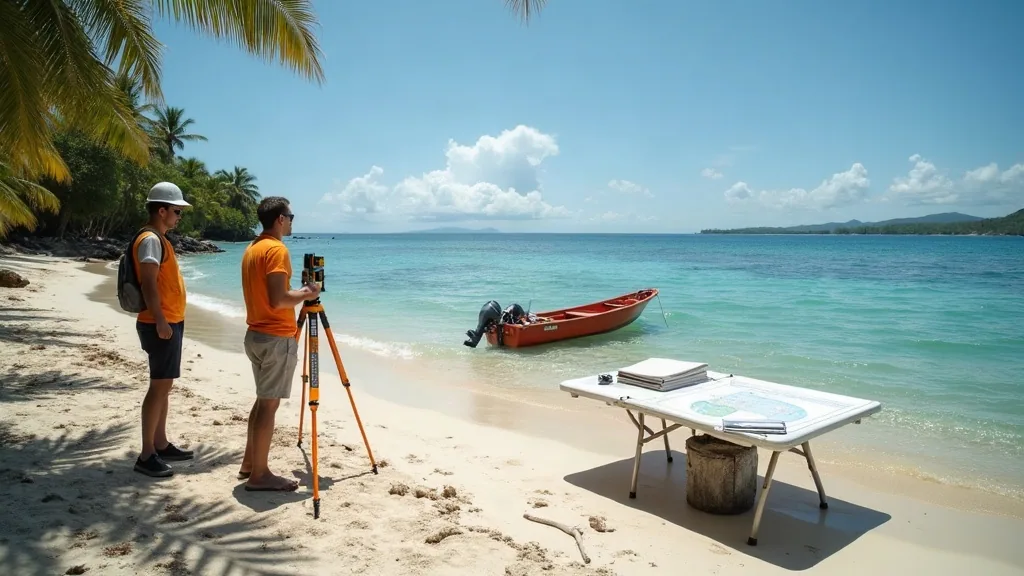
A yacht marina at Sorong is one of the more obvious unbuilt opportunities in Indonesian marine infrastructure, and it will fail if it is modelled on the wrong assumptions. The demand exists but it is seasonal and modest. The site constraints are real. The permitting pathway crosses several authorities. This is a working list of the questions a feasibility study has to answer honestly before anyone commits capital.
1. Demand: who actually berths here?
Three segments, in descending order of certainty.
Indonesian-flag liveaboards. The most reliable demand. A fleet already runs Raja Ampat seasons and currently turns around against commercial quays on borrowed time. A bookable berth with fuel, water, power and waste at a predictable price solves a problem they experience every week. This is the anchor tenancy of any credible plan.
Foreign cruising yachts and superyachts. Real but seasonal and lumpy. They currently clear and leave because there is no reason to stay. A berth changes the calculus, but this segment will not fill a marina by itself and its numbers should be modelled conservatively.
Regional and domestic motor yachts and sport-fishing craft. A growing segment as Indonesian ownership extends eastward, but small today and dependent on the marina existing to be measurable.
The study must resist the temptation to import berth-occupancy assumptions from mature markets. A defensible model shows modest berth revenue and substantial service revenue — fuel, water, power, hardstand, technical work, agency — which is the pattern that actually sustains remote marinas.
2. Shelter in both monsoons
This is the first physical filter and it eliminates most candidate sites. A basin must be tenable in both the north-west season and the south-east season. A site that is comfortable from October to April and untenable from June to September is a half-year asset carrying a full-year cost. Wave climate should be assessed from measurement and modelling, not from a site visit in a calm month.
3. Depth, approach and dredging exposure
Approach depth must suit the target vessel size without a dredging programme that dominates capital cost — and dredging in this environment carries permitting and environmental exposure well beyond its price. The approach should also be navigable at night and in reduced visibility, because a marina that can only be entered in daylight in good conditions is a marina with a reduced customer base. Existing charted data in the region is not uniformly modern and a proper bathymetric survey is not optional.
4. Reef and environmental impact
The single question most likely to end a project. A marina adjacent to one of the world’s most significant reef systems will be scrutinised, and rightly. Site selection should prioritise areas where a basin can be developed without destroying live coral, where sediment plumes during construction can be controlled, and where operational discharge, fuelling and waste handling can be managed to a standard that survives inspection. An environmental assessment conducted properly and early costs far less than one conducted defensively after a design has been fixed.
5. Land tenure and community rights
Backing land is required for parking, workshops, offices, stores, hardstand and any hospitality component. Tenure must be clear, and customary community rights must be resolved through genuine agreement rather than assumed away. Projects in Indonesia that treat customary claims as a formality tend to discover otherwise at the least convenient moment. Community participation in the operating business, not just compensation for land, tends to produce durable arrangements.
6. Utilities, access and labour
Grid power of usable quality and reliability, or a plan for generation. Water supply at marina volumes. Road access capable of taking construction traffic and, later, fuel tankers and service vehicles. Proximity to the airport for guest and crew movement. And a labour picture that acknowledges skilled marine trades are thin locally and will need training or importing — a training pathway is a real part of the capital plan, not a corporate-responsibility footnote.
7. Permitting pathway
A marina here touches marine spatial planning, environmental assessment, port and harbour authority approval, land and building permissions, and potentially the special economic zone administration and provincial government. The sequence and current requirements change. A feasibility study should map who owns each decision, what the realistic timeline is, and where the genuine risk sits — rather than presenting a static checklist that will be out of date by the time it is used. We map that pathway locally as part of the work described on our marina project page.
8. Phasing that can survive a slow start
The defensible sequence, and the one we would argue for:
- Services first. Agency, fuel and water coordination, provisioning, technical support and shoreside logistics — businesses with customers today.
- A modest berth facility for a defined vessel size, sized against demonstrated demand rather than aspiration.
- Hardstand and technical capability, which converts transient calls into extended stays and captures far more value per vessel.
- Hospitality and property, last, once there is a reason for guests to stay.
Each stage should stand on its own revenue. A project that requires stage four to justify stage one is a project betting on a market that does not yet exist.
9. The comparison that has to be made
Any feasibility study should benchmark against Labuan Bajo, which had a comparable proposition a decade ago and has since developed rapidly, and against Bitung and Biak as alternative eastern bases. Our home-port comparison sets out how those ports differ operationally. Labuan Bajo’s trajectory is instructive in both directions: it shows what concentrated tourism demand can build, and it shows what happens when infrastructure lags demand for years.
What we contribute
Local ground truth, site screening input, stakeholder mapping, demand-side observation from vessels we actually handle, and coordination of surveys and specialist consultants. We are not engineers, environmental consultants, lawyers or investment advisers, and we say so — see our marine logistics and port advisory page. A study built on our input plus properly qualified specialists is a study an investment committee can defend.
Frequently Asked Questions
Is a yacht marina in Sorong commercially viable?
Potentially, on a conservative model. The reliable anchor demand is the Indonesian-flag liveaboard fleet already turning around against commercial quays. Foreign cruising yachts add seasonal, lumpy demand. A defensible model shows modest berth revenue with substantial service revenue from fuel, water, power, hardstand, technical work and agency.
What is the first physical constraint on a Sorong marina site?
Shelter in both monsoon regimes. A basin must be tenable in the north-west season and the south-east season; a site comfortable only from October to April is a half-year asset carrying a full-year cost. Wave climate should be assessed by measurement and modelling rather than a calm-month site visit.
What is most likely to stop a marina project in this region?
Environmental impact on reef systems, and unresolved land tenure or customary community rights. A marina adjacent to one of the world's most significant reef systems will be scrutinised closely, and customary claims treated as a formality tend to surface at the least convenient moment.
What phasing makes a Sorong marina defensible?
Services first — agency, fuel and water coordination, provisioning, technical support and shoreside logistics, which have customers today; then a modest berth facility sized to demonstrated demand; then hardstand and technical capability; and hospitality or property last. Each stage should stand on its own revenue.
Send this first
LOA and flag, ETA Sorong, last port, crew and guest count. The desk answers with the sequence, not a brochure.
WhatsApp the desk