Journal · field notes from the gateway
Sorong as Eastern Indonesia's Superyacht Gateway
The structural case for Sorong as a superyacht logistics hub for Raja Ampat: proximity, port capability, air links, provincial status and the infrastructure gap that still has to be closed.
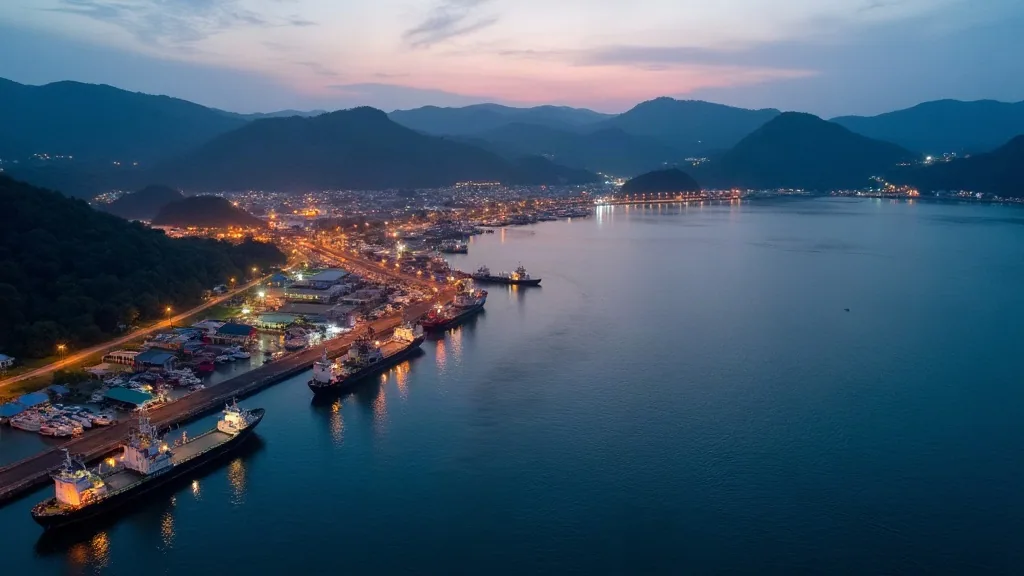
Sorong is becoming eastern Indonesia’s superyacht gateway not because it is well equipped, but because it is close to something extraordinary and nothing else is. Raja Ampat sits sixty nautical miles offshore. Every large yacht that goes there passes through Sorong, and a growing number of them stop rather than merely clear. That traffic is building a service economy in front of infrastructure that has not caught up, which is both the opportunity and the constraint.
The structural drivers
1. Proximity that cannot be competed away
Geography does not change. Waisai is a two-hour ferry ride and an overnight liveaboard passage from Sorong. Bali and Bitung are days away. As long as Raja Ampat is the destination, Sorong is the gateway, and no amount of investment elsewhere alters that.
2. Raja Ampat’s standing keeps rising
The archipelago’s reputation among divers and expedition travellers has grown steadily, and the conservation model — entry contributions funding patrols and community programmes — has kept the reefs in a condition that sustains the reputation rather than eroding it. Destinations that protect their asset keep their visitors; destinations that do not, do not.
3. Provincial and economic-zone status
The creation of Southwest Papua as a province, with Sorong as its centre, concentrated administrative attention on the city, and the special economic zone designation added an infrastructure and investment framework. Whatever the pace of delivery, the direction of policy attention is toward the port, not away from it.
4. An existing industrial base
Unlike a greenfield resort location, Sorong already has a working port, a fisheries sector, fuel and water logistics, mechanical trades and an airport with real connectivity. A superyacht economy does not have to be built from nothing; it has to be layered onto something that already functions.
What superyachts currently do
The typical pattern today is straightforward and slightly wasteful. The vessel clears in at Sorong, takes fuel and water, loads whatever provisioning is available locally, collects a specialist consignment flown in from Bali or Singapore, moves guests through the airport, and departs for the archipelago as quickly as the logistics allow. Sorong is treated as a transaction rather than a base. That is a rational response to the absence of a berth, but it means the city captures a fraction of the value of the traffic passing through it.
The services that actually get bought are the ones described across this site: clearance, fuel, water and provisioning, crew and guest movement, and superyacht coordination. What is not bought, because it does not exist, is berthing, hardstand, technical depth and shoreside hospitality.
The gap, stated plainly
- No berth. No marina, no floating dock, no fuel dock. Alongside means a commercial quay on borrowed time.
- No yacht technical depth. Diesel and steel yes; electronics, stabilisers, air conditioning, watermakers no.
- No yacht-standard yard. Commercial slipways only, as covered in our haul-out article.
- No specialist supply. Everything imported comes by air from Bali, Jakarta or Singapore.
- No shoreside hospitality of a standard a superyacht guest expects. Business hotels, not resorts.
Each gap is currently bridged by logistics and lead time. Each is also, from an investor’s perspective, an unmet demand with an identifiable customer already arriving on its own.
How the hub develops, realistically
The plausible sequence is service-first. Agency, fuel and water coordination, provisioning, technical coordination and shoreside logistics are already viable businesses because the traffic exists. Local technical capability deepens next, as trained people find enough work to stay. Then a modest berth facility — a defensible investment once there is a demonstrated book of vessels that would use it. Hardstand and technical yard capability follow. Hospitality and property come last, when there is a reason for guests to stay rather than transit.
The failure mode is doing that list backwards: building a marina and hotel first and hoping the vessels appear. The demand is real but it is seasonal and it is not enormous, which is the argument set out in our feasibility overview and on the marina project page.
What would accelerate it
Three things, none of which require heroic capital. A reliable, bookable alongside facility for vessels up to a defined size, even a modest one, would change the economics of a Sorong call immediately. A bonded or expedited route for yacht spares and provisions would remove the single biggest friction in supporting large vessels here. And consistent, publicly stated clearance procedures and timings would let masters plan with confidence rather than relying on local knowledge. The first is capital, the second and third are administrative.
The honest position
Sorong is not yet a superyacht hub. It is a working port that superyachts have to use, served by people who make the gaps survivable. Calling it more than that would be marketing rather than description. But the traffic is real, the geography is permanent, and the gap between what arrives and what is available is precisely where a business gets built. We would rather describe that accurately and help clients work inside it than sell a version of Sorong that does not exist.
Frequently Asked Questions
Is Sorong already a superyacht hub?
Not yet. Sorong is a working commercial port that superyachts must use because it is the closest Indonesian entry point to Raja Ampat. It has clearance, fuel, water, local provisioning and airport connectivity, but no marina berth, no yacht-standard yard, no specialist technical depth and no resort hospitality.
What makes Sorong's position structurally durable?
Geography that cannot be competed away, since Waisai is a two-hour ferry ride and an overnight liveaboard passage while Bali and Bitung are days off; Raja Ampat's rising standing among divers and expedition travellers; provincial and special economic zone status concentrating policy attention; and an existing industrial port base to build on.
What would most accelerate Sorong's development as a yacht hub?
A reliable, bookable alongside facility for vessels up to a defined size; a bonded or expedited route for yacht spares and provisions; and consistent, publicly stated clearance procedures and timings. Only the first requires significant capital.
Why do superyachts currently treat Sorong as a transaction rather than a base?
Because there is nowhere to lie. Vessels clear in, take fuel and water, load available provisions, collect flown-in consignments, move guests through the airport and leave for the archipelago, so the city captures only a fraction of the value of the traffic passing through it.
Send this first
LOA and flag, ETA Sorong, last port, crew and guest count. The desk answers with the sequence, not a brochure.
WhatsApp the desk