Journal · field notes from the gateway
Raja Ampat Marine Park Rules for Yachts and Liveaboards
The conservation rules that govern yacht and liveaboard operations in Raja Ampat: entry contributions, zoning, anchoring, protected species, waste, drones and community access.
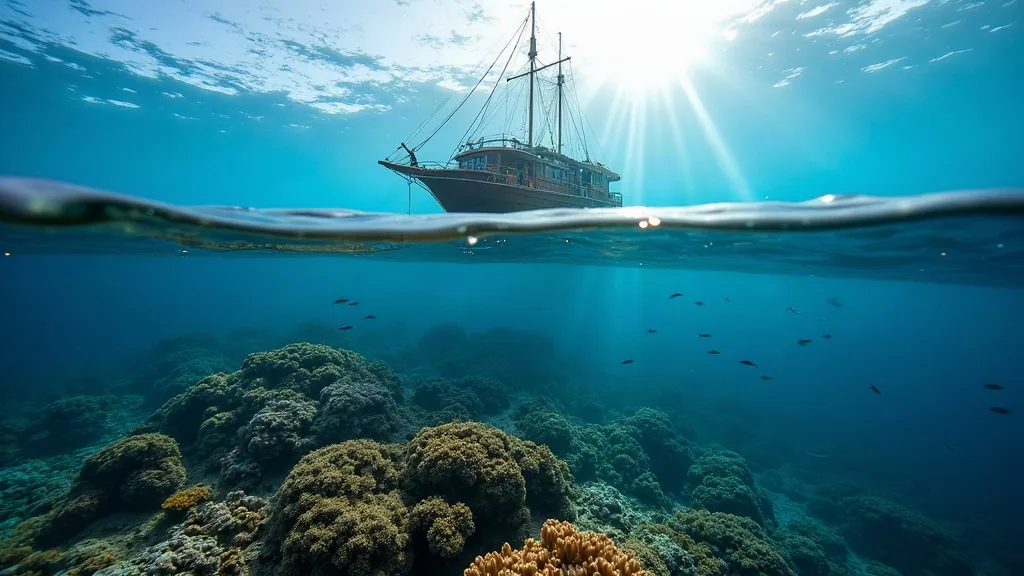
Raja Ampat is not open water with good diving on it — it is a managed marine protected area with zoning, protected species, a conservation entry contribution and community rights over much of the shoreline. A yacht that treats it as an ordinary cruising ground will eventually be corrected, sometimes politely by a ranger and sometimes expensively. The rules are not onerous. They simply have to be known before you sail rather than after you are boarded.
The conservation entry contribution
Every visitor to the Raja Ampat marine protected area pays a conservation entry contribution administered by the regional management authority. It is per person, evidenced by a card or receipt, and generally valid for a defined period rather than a single day. Rates differ between foreign and Indonesian visitors and are revised from time to time; we confirm the current tariff and issuing process for every itinerary rather than publishing a figure that will age badly.
Practical guidance: buy for everyone who will be in the water or ashore, obtain it before you enter the park rather than at the point of inspection, keep the evidence somewhere the crew can produce it immediately, and treat a ranger’s request to see it as entirely routine. The money funds patrols, monitoring and community programmes, which is why the reefs are in the condition they are.
Zoning: where you may and may not go
The archipelago is divided into zones with different permitted uses — core protection areas with the tightest restrictions, sustainable fisheries zones, tourism-use zones and community areas. Zoning governs where you may anchor, where diving is permitted, where fishing is prohibited and where access requires a local arrangement. Zone boundaries are not always obvious from the water, which is exactly why the itinerary should be checked against them before departure rather than negotiated with a patrol afterwards.
Anchoring: the rule that matters most
Anchoring on coral is prohibited, and the prohibition exists because the damage is severe and slow to heal. An anchor and chain dragging across a reef in a tidal stream destroys structure that took decades to grow, and it does so in minutes.
The practice that keeps you compliant and keeps the reef intact:
- Use established moorings where they exist, and inspect them before trusting the vessel to one.
- Where you must anchor, anchor in sand, verified visually or by sounder, at an appropriate depth with proper scope.
- In the narrow karst bays, run a stern line ashore rather than swinging across a reef — this is standard practice in Raja Ampat, not an unusual measure.
- Plan for the current, not just the wind. A vessel lying to a stream swings differently from what most crews expect.
- Brief tender operations explicitly: propellers in shallow coral do their own damage.
The seamanship side of this is covered in our seasons and routes article.
Protected species and fishing
Raja Ampat is a declared shark and ray sanctuary, and sharks, manta rays and a range of other species are protected. Fishing is prohibited outright in core zones and restricted elsewhere; guests who assume a yacht means trolling should be briefed before the rods come out. Feeding marine life is not permitted. Interaction rules apply around mantas and other protected species — keep distance, do not chase, do not block movement, and do not touch. Turtles, dugong and cetaceans warrant the same discipline.
Collecting anything is out of the question: no shells, no coral, no marine curios. This should be in the guest briefing on the first night, because guests who are told nothing will occasionally pick something up in complete innocence.
Waste, discharge and drones
Nothing goes over the side. Not food waste, not packaging, not grey water in enclosed bays where it accumulates, and emphatically not oily bilge or untreated sewage. Hold it and land it at Sorong through licensed removal, arranged in advance — see our provisioning and waste page. Sunscreen matters more than most guests realise; reef-safer formulations are a small change with a real effect in an enclosed lagoon full of swimmers.
Drone use warrants specific care. Aerial filming over villages, over nesting sites and over some tourism locations may require permission, and a drone launched without asking is a reliable way to create a problem with a community that has every right to object. Check before flying, and declare the drone at customs on arrival — undeclared drones are a recurring source of trouble in Indonesian clearances generally, as covered on our clearance page.
Community rights and access
Much of Raja Ampat’s land and near-shore area is subject to customary community ownership. Village visits, access to certain bays, lagoons, birding sites and specific dive sites depend on arrangements with the community concerned, which may involve a fee, a guide or simply asking properly. This is not bureaucracy; it is the reason the region’s tourism model has held together. Bypassing it is discourteous and, practically, a good way to be turned away at the beach.
Compliance is an operator responsibility
The vessel and its operator carry the responsibility, not the guests. That means a proper briefing on the first night, crew who know the rules well enough to intervene politely, entry contributions held for everyone aboard, an itinerary checked against zoning, and a compliance pack the vessel can produce on inspection. Our permits and regulations page sets out how we prepare that for a specific route — and if an itinerary includes something that does not comply, the time to hear it is before departure.
Frequently Asked Questions
Who administers the Raja Ampat marine park entry contribution?
The conservation entry contribution is administered by the regional management authority for the Raja Ampat marine protected area. It is issued per person, evidenced by a card or receipt that rangers may inspect, generally valid for a defined period, and priced differently for foreign and Indonesian visitors.
Is anchoring on coral allowed in Raja Ampat?
No. Anchoring on coral is prohibited. Use established moorings where they exist after inspecting them, anchor only in sand verified visually or by sounder, and run a stern line ashore in narrow karst bays rather than swinging across a reef.
Can guests fish from a yacht in Raja Ampat?
Fishing is prohibited outright in core zones and restricted elsewhere, and Raja Ampat is a declared shark and ray sanctuary. Guests should be briefed before any rods appear, feeding marine life is not permitted, and collecting shells or coral is prohibited.
Do drones need permission in Raja Ampat?
Aerial filming over villages, nesting sites and some tourism locations may require permission, and flying without asking risks a legitimate objection from the community concerned. Drones must also be declared to customs on arrival in Indonesia; undeclared drones are a recurring cause of clearance problems.
Send this first
LOA and flag, ETA Sorong, last port, crew and guest count. The desk answers with the sequence, not a brochure.
WhatsApp the desk