Journal · field notes from the gateway
Sorong vs Waisai as a Turnaround Base
Sorong wins the turnaround-base comparison on almost every cost line — fuel, provisioning depth, spares, crew connections, formalities capacity — while Waisai wins on one line only, and…
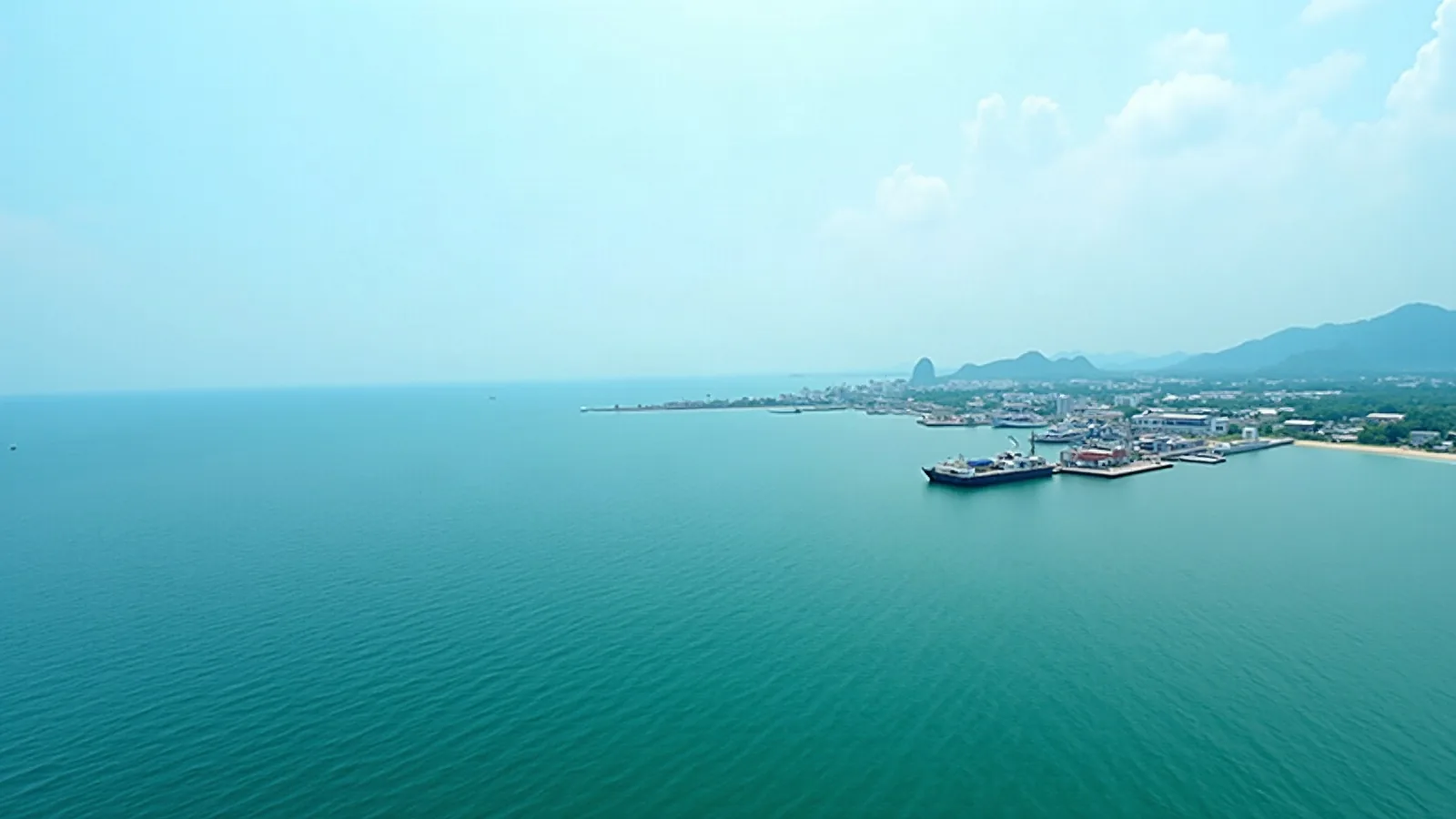
Sorong wins the turnaround-base comparison on almost every cost line — fuel, provisioning depth, spares, crew connections, formalities capacity — while Waisai wins on one line only, and it is a real one: position inside the park. The honest analysis is not which town is better but which lines dominate your schedule. Boats that turn around heavy favour Sorong; boats that top up light mid-trip use the park side for what it is; most serious operations end up with a deliberate split.
Frame the comparison honestly
Waisai is the Raja Ampat regency capital on Waigeo, inside the park boundary, with a ferry link to Sorong and park-side administrative functions. Sorong is the mainland gateway city: full CIQP formalities, jet airport, fuel logistics at every scale, markets and freight connections. These are not competing marinas — neither has one — they are different kinds of places, and the comparison only makes sense line by line against a specific operating schedule.
Cost line one: fuel
Sorong offers the full menu of bunkering modes — truck-to-wharf volume, arranged barge, drum runs — with supplier depth and competitive structure. Park-side fuel is thinner, slower to arrange, and carries the logistics premium of everything that crosses to the islands. For a liveaboard burning serious volume each trip, this line alone often decides the base question. Fuel is also where quality discipline pays; supplier depth in Sorong is a quality argument, not merely a price one.
Cost line two: provisioning and spares
The Sorong market and supermarket layer feeds a charter galley honestly; the flown-in specialty lane lands at SOQ with scheduled freight. Waisai’s supply is village-plus scale — genuine, but shallow for boat volume, and largely trans-shipped through Sorong anyway, with the mark-up that implies. Spares tell the same story more sharply: an impeller or injector reaching Waisai has already been through Sorong. Basing where the freight lands removes a whole layer of delay from every technical problem.
Cost line three: people movement
Guests and crew arrive on jets at SOQ. From there, a Sorong-based boat runs a twenty-minute drive and a tender; a Waisai-based boat adds the two-hour ferry with its schedule, or a charter transfer. Every crew change and guest day multiplies this difference across a season. The airport-to-gangway choreography that makes Sorong shine is its own subject — the SOQ guest-day choreography — but the structural point is simple: the fewer legs between jet and gangway, the fewer things break.
Cost line four: formalities
Foreign-vessel state clearance runs through Sorong’s full four-authority presence — the sequence walked through on the clearance sequence explainer. Park-side capacity is oriented to park administration and domestic movement. Any schedule involving international arrival or departure, temporary-import events or crew-list changes is anchored to Sorong regardless of where the boat prefers to float. Fighting that anchor costs more than planning around it.
The one line Waisai wins — and it matters
Position. A Waisai-area start puts the Dampier Strait dive sites an hour or two away instead of a crossing away. For short itineraries, dense trip schedules, or operations whose guests transfer park-side anyway, hours saved per trip accumulate into real money and better product. This page does not pretend otherwise. In-park operations — moorings, park fees, water logistics inside the boundary — belong to park-side resources and are outside this desk’s lane; what we can say from the Sorong side is that the position advantage is genuine and quantifiable per itinerary.
The split model most operators reach
Heavy turnarounds — fuel volume, deep provisioning, crew rotation, technical work — staged in Sorong on planned days; light mid-trip top-ups handled park-side; guests brought through SOQ either way. Between trips, the waiting question has its own Sorong-side answers, covered in how boats wait out the gaps in Sorong. The split model is not a compromise; it is each place doing what it is actually good at.
The crossing itself, counted honestly
The Dampier crossing between Sorong and the Waisai side is the recurring toll of a Sorong base: a few hours each way, weather-dependent, with the strait’s currents and afternoon chop deserving respect rather than fear. Counted across a season it is a genuine cost in fuel and engine hours — and it is also the only line on the Sorong side of the ledger that grows with trip frequency. Operators running very short, very frequent rotations feel it most; expedition-length itineraries barely notice it. Put your own trip count against it and the toll prices itself.
Running the numbers for your schedule
Send the desk your season pattern — trips, guest counts, fuel burn, crew rotation rhythm — and we return the comparison priced in USD for the Sorong-side lines, with the passage-hours trade-off laid out honestly rather than sold. The structure-first logic of the structure-first pricing guide applies: you see where every dollar sits before committing a season to either base. Most schedules, priced honestly, choose Sorong for the heavy work — but the point of the exercise is that yours gets its own answer.
Frequently Asked Questions
Which is less costly as a turnaround base, Sorong or Waisai?
Sorong, for almost every cost line that matters: fuel modes and volume, provisioning depth, spares access and direct jet connections. Waisai’s advantage is position inside the park — hours saved on passage — which for some itineraries outweighs the cost lines.
Can a liveaboard do full clearance in Waisai?
Waisai’s formalities capacity is limited compared with Sorong’s full CIQP presence. State clearance for foreign vessels runs through Sorong; Waisai serves park-side administration and domestic movements. Check current arrangements rather than assuming.
Where should guests fly into?
SOQ (Sorong) has the jet connections; reaching Waisai adds the ferry or a charter hop. Most operators bring guests through Sorong even when the boat bases further in — which itself argues for Sorong turnarounds.
Does basing in Sorong waste passage time to the park?
It costs the Dampier crossing each way — real hours, honestly counted. The question is what those hours buy: less costly fuel, deeper provisioning, faster spares and simpler crew changes. For most schedules the crossing pays for itself.
Can the desk support a split model?
Yes — heavy turnarounds in Sorong, light mid-trip top-ups park-side through appropriate park-side channels. We coordinate the Sorong half and are honest about where our lane ends; in-park water operations belong to park-side resources.
Send this first
LOA and flag, ETA Sorong, last port, crew and guest count. The desk answers with the sequence, not a brochure.
WhatsApp the desk