Journal · field notes from the gateway
Where Liveaboards Wait in Sorong Between Trips
Between Raja Ampat trips, liveaboards wait in Sorong the way the port allows: at anchor in the roadstead for most purposes, alongside a commercial wharf only for working…
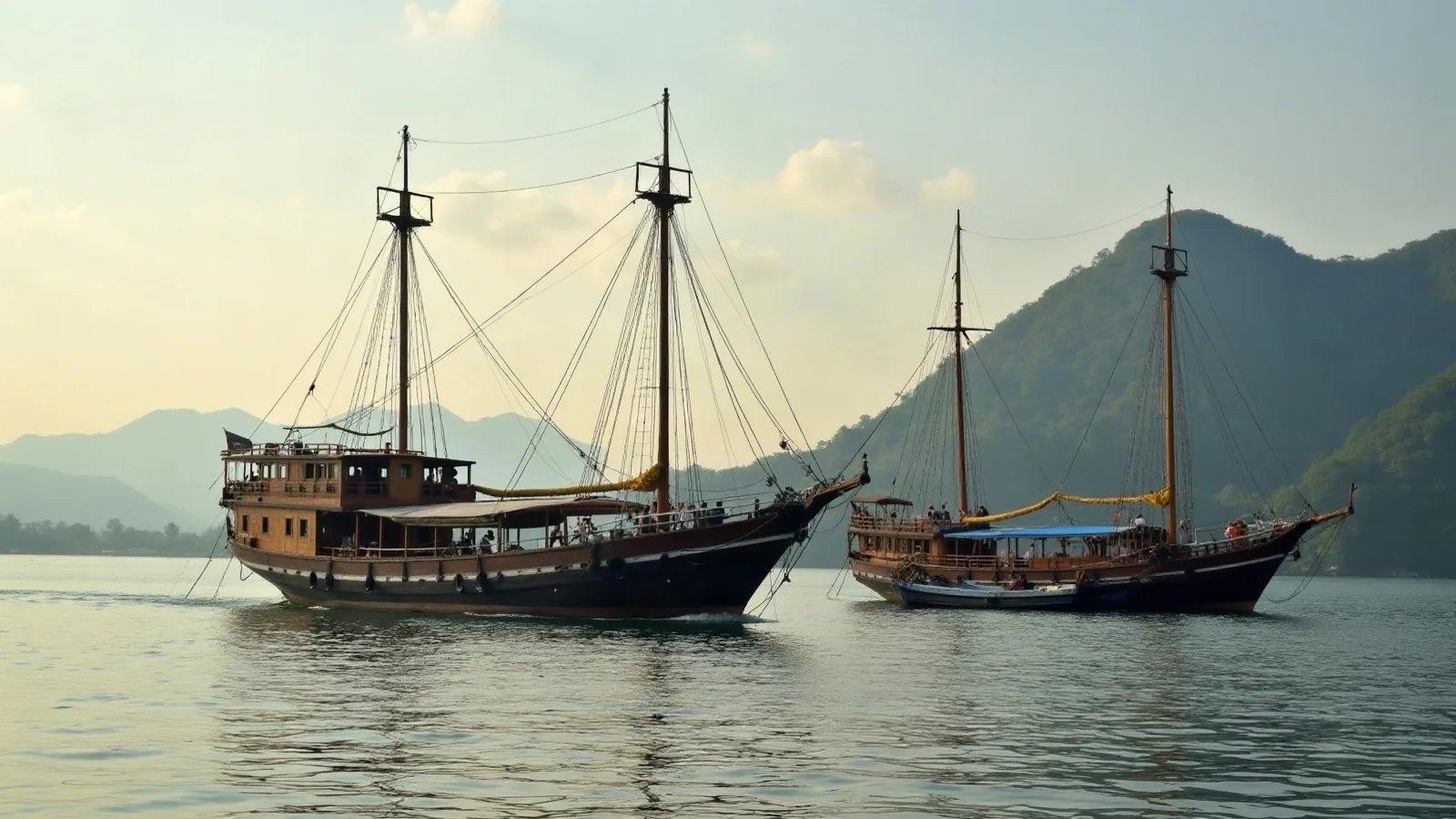
Between Raja Ampat trips, liveaboards wait in Sorong the way the port allows: at anchor in the roadstead for most purposes, alongside a commercial wharf only for working windows, and in quieter nearby water when the gap stretches to weeks. There is no marina row to tie up in — every waiting arrangement is coordinated, watched and paid for as what it is. Knowing the real options, and what each one asks of your crew, is what turns a between-trips gap from dead time into affordable, useful time.
The three real options
First: the working anchorage off the city — close to supplies, close to the airport, exposed to wake and weather, and requiring a live watch. Second: commercial wharf windows — priceless for a fuel truck, a spares delivery or a heavy provisioning load, but negotiated by the day and never a residence. Third: quieter water within reach of the city — better shelter and less traffic for a vessel sitting out a long gap, at the cost of distance from the market and the airport. Most boats use all three across a season, in that order of frequency.
What the anchorage asks of a crew
The roadstead is honest about its demands: good ground tackle properly set, scope you would defend in a squall, an anchor watch that actually watches, and fenders ready for the neighbour who arrives after dark. Squalls are short but sharp; the boats that drag are the ones nobody was watching. A skeleton crew of two can hold a liveaboard at anchor comfortably provided the rotation is real — the failure mode is not the weather, it is the afternoon everyone went ashore.
The turnaround stop, compressed
The productive version of waiting is the staged turnaround: waste off first, then water, fuel and provisioning landing in planned sequence, crew rotating through DEO airport, small technical jobs knocked out while the boat is workably positioned. Compressed into one or two days, this is the difference between a gap that costs money and a gap that earns the next trip its readiness. The full choreography — what books ahead, what runs in parallel — is the subject of our turnaround support page.
Longer gaps: from waiting to layup
A fortnight between charters is waiting; a low-season gap of two months is layup, and layup is a different discipline. Systems want exercising on a schedule, not abandonment: engines run, seacocks cycled, tanks managed, mould fought daily in this climate, and the hull’s growth rate respected. A watchman keeps the boat present; he does not keep it healthy. Owners bridging a long gap should be honest about which of the two they are buying, because the price difference is real and so is the outcome difference.
Beyond the watchman: professional management
Where a long layup meets a distant owner, the honest answer is often professional vessel management between charter seasons — scheduled systems runs, crew administration, maintenance planning and owner reporting handled as a programme rather than a favour. Within the group’s ecosystem that capability exists and is contracted separately; the Sorong desk’s role is the port-side coordination that plugs into it. We say plainly which arrangement fits which gap, because selling a watchman where a manager is needed is how boats quietly deteriorate.
What it costs, and how it is quoted
Waiting costs stack simply: any wharf windows at their negotiated rates, watchkeeping or caretaker coverage per day or per visit, launch runs for crew and supplies, and whatever the turnaround consumes in fuel, water and provisioning. The desk quotes each line in USD before you commit, official items passed through at cost — the same structure-first logic as the published cost framework. Nothing about waiting well is expensive by charter-economics standards; everything about waiting badly is.
Sorong versus sailing home between trips
The arithmetic usually settles it: a return passage to Bali or Bitung between charters burns fuel, engine hours and crew days that dwarf the cost of waiting at the gateway. What Sorong cannot offer is marina amenity — shore power at a finger pontoon, a chandlery walk away. What it offers instead is position: the next charter starts where the last one ended, guests fly to SOQ, and the boat spends the gap being readied instead of repositioned. For comparison shopping at base level, the Sorong-versus-Waisai analysis completes the picture.
Arranging it
Message the desk with vessel, crew remaining aboard, gap dates and what the boat needs from the gap — waiting only, turnaround, or managed layup — and the options come back scoped in USD the same working day. The port has room for a patient boat; the art is in arranging the patience properly.
Frequently Asked Questions
Where do liveaboards actually wait between charters in Sorong?
At anchor in the roadstead, on short commercial wharf windows for working days, or — for longer gaps — in quieter water nearby chosen for shelter and watchkeeping practicality. There is no marina row; every waiting spot is an arrangement, not a berth number.
Is it safe to leave a vessel at anchor with a skeleton crew?
With a proper watch rotation, good ground tackle and a plan for squalls, yes — it is what the local fleet does. The risks are dragging in an unwatched blow and the slow decay of systems nobody is exercising, both answered by discipline rather than infrastructure.
Can the desk supply a watchman or caretaker crew?
We coordinate trusted local watchkeeping and periodic checks as a service, quoted in USD. For longer layups needing systems runs, cleaning cycles and reporting to an absent owner, that shades into professional management — which we scope honestly.
What does a between-trips stop usually include?
Waste off, water and fuel on, provisioning for the next trip, crew rotation through the airport, and any small technical jobs — compressed into one or two staged days, which is the entire art of the turnaround.
Does waiting in Sorong cost less than returning to Bali?
Almost always, once fuel and time are counted. The trade-off is amenity: Sorong is a working port, not a marina destination. For most Raja Ampat schedules the arithmetic favours staying at the gateway.
Send this first
LOA and flag, ETA Sorong, last port, crew and guest count. The desk answers with the sequence, not a brochure.
WhatsApp the desk