Journal · field notes from the gateway
Foreign Charter Yachts in Raja Ampat: The Legal Shape of the Problem
Why cabotage matters for foreign-flag yachts wanting to charter in Raja Ampat, how the private-versus-commercial distinction is tested, and the routes operators actually use.
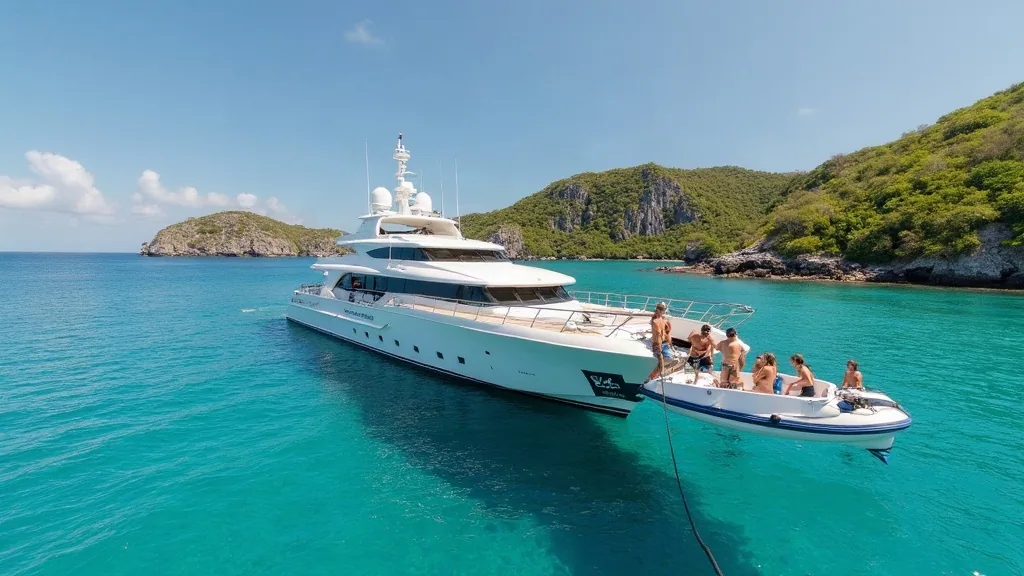
The short answer is that a foreign-flag yacht cannot simply arrive in Indonesia and start selling charters in Raja Ampat. Indonesia reserves the carriage of passengers and cargo between Indonesian points for Indonesian-flag vessels, and the distinction between a private yacht cruising with its owner aboard and a commercial vessel carrying paying guests is one the authorities take seriously. This briefing sets out the shape of the issue so that an owner or manager can ask the right questions of proper advisers. It is not legal advice and it should not be used as a substitute for it.
The principle: cabotage
Cabotage reserves domestic transport to domestic-flag operators, and Indonesia applies it firmly. The policy exists to protect the national fleet, and it has been reinforced rather than relaxed over the years. Applied to yachts, the effect is that commercial carriage of passengers between Indonesian ports is territory reserved for Indonesian-flag vessels holding the appropriate licences.
A private yacht cruising with its owner, family and non-paying guests aboard does not engage this. The vessel is not carrying passengers commercially; it is being used privately. That is why cruising Indonesia on a foreign-flag yacht is entirely normal and why thousands of yachts have done it.
Where the line actually falls
The difficulty is that the line is drawn on substance rather than on labels. Factors that matter in practice include whether money changes hands for the voyage, whether the vessel is marketed as available for charter, whether guests are strangers to the owner, whether a crew is employed to serve paying guests, and whether the vessel’s own papers and flag-state certification permit commercial operation at all.
The failure mode is well known in the yachting world: a vessel advertised openly on international charter platforms with a weekly rate, arriving in Indonesia and clearing in as a private yacht. That is a discrepancy anyone can find in thirty seconds, and it has been found. Vessels have had itineraries interrupted over exactly this point.
Why Raja Ampat raises the stakes
Raja Ampat is not a quiet corner. It is a high-profile marine protected area with an established liveaboard industry, active rangers, a regional management authority and a local community with a direct economic interest in how tourism is conducted. There is a functioning domestic fleet paying Indonesian taxes and holding Indonesian licences, and it notices foreign-flag competition operating on a different basis. Enforcement attention in this region is therefore higher than in an anonymous stretch of coast, not lower.
Add to that the compliance obligations that apply to everyone inside the park — entry contributions, zoning, anchoring rules, protected species, waste discipline — and a vessel already operating on a questionable commercial basis has multiple surfaces on which to attract scrutiny. Our article on marine park rules covers those obligations.
The routes operators actually use
1. Operate an Indonesian-flag vessel
The cleanest route, and the one the entire Raja Ampat liveaboard industry uses. An Indonesian-flag vessel with the correct licences may carry paying guests domestically without the cabotage question arising. For an owner committed to the market, acquiring or building an Indonesian-flag vessel — or chartering one in — removes the problem structurally rather than managing it.
2. Keep the vessel genuinely private
Cruise with owner and guests, no money for the voyage, no marketing, no commercial crew arrangement. This is legitimate and straightforward, and it is what most visiting foreign yachts do. It requires the position to be true rather than merely stated.
3. Establish a compliant commercial position in advance
Where an owner wants foreign-flag commercial operation in Indonesia, the position must be built before arrival with flag-state certification, Indonesian structure and the applicable permissions, advised by people who do this professionally. This is a project with lead time, not a form filled in at the port.
4. Do not attempt the grey middle
The route that fails is the improvised one: a vessel that is commercially marketed, privately declared and hoping the two do not meet. In a region with an organised domestic fleet and an attentive authority, they meet.
Practical questions to answer before committing
- What flag is the vessel, and does its flag-state certification permit commercial operation with the intended number of guests?
- Is the vessel currently marketed anywhere as available for charter, at any rate, in any market?
- Will any payment be made for the voyage, by anyone, in any form?
- Are the guests known to the owner, or are they customers?
- Is the crew employed to serve paying guests, and how are they contracted and insured?
- What does the vessel’s insurance actually cover — private use, or commercial carriage?
- What is the intended structure in Indonesia, and who advised on it?
An owner who can answer all seven consistently is in a defensible position. An owner whose answers conflict has found the problem before the authorities did, which is the useful outcome of asking.
What we do and do not do
We handle clearance, agency, logistics and compliance coordination at Sorong for vessels whose position is already established — see our agency services and permits and regulations pages. We do not give legal advice, we do not structure companies, and we will not help present a commercial operation as a private one. Where a vessel’s intended operation raises the cabotage question, we say so at the enquiry stage and point the owner at proper counsel. That conversation costs far less than the alternative.
Frequently Asked Questions
Can a foreign-flag yacht charter commercially in Raja Ampat?
Not without establishing a compliant position in advance. Indonesia reserves carriage of passengers between Indonesian points for Indonesian-flag vessels, so commercial charter by a foreign-flag yacht requires flag-state certification, Indonesian structure and applicable permissions, or the operation should use an Indonesian-flag vessel.
Is cruising Indonesia on a foreign-flag yacht legal?
Yes. A private yacht cruising with its owner, family and non-paying guests does not engage the cabotage principle, which is why thousands of foreign yachts have cruised Indonesia. The position must genuinely be private rather than merely declared as such.
How is the private-versus-commercial distinction assessed?
On substance rather than labels: whether money changes hands for the voyage, whether the vessel is marketed as available for charter, whether guests are customers rather than the owner's guests, how crew are engaged, and whether the vessel's flag-state certification and insurance permit commercial operation.
Why is enforcement attention higher in Raja Ampat?
Raja Ampat is a high-profile marine protected area with active rangers, a regional management authority, an engaged local community and an established domestic liveaboard fleet holding Indonesian licences. That combination produces more scrutiny than an anonymous stretch of coast.
Send this first
LOA and flag, ETA Sorong, last port, crew and guest count. The desk answers with the sequence, not a brochure.
WhatsApp the desk