Journal · field notes from the gateway
The Superyacht Advance-Team Checklist for Eastern Indonesia
A superyacht call at the Raja Ampat gateway succeeds in the planning quarter, not the arrival week: fuel volume feasibility, formalities strategy, guest movement design and contingency mapping…
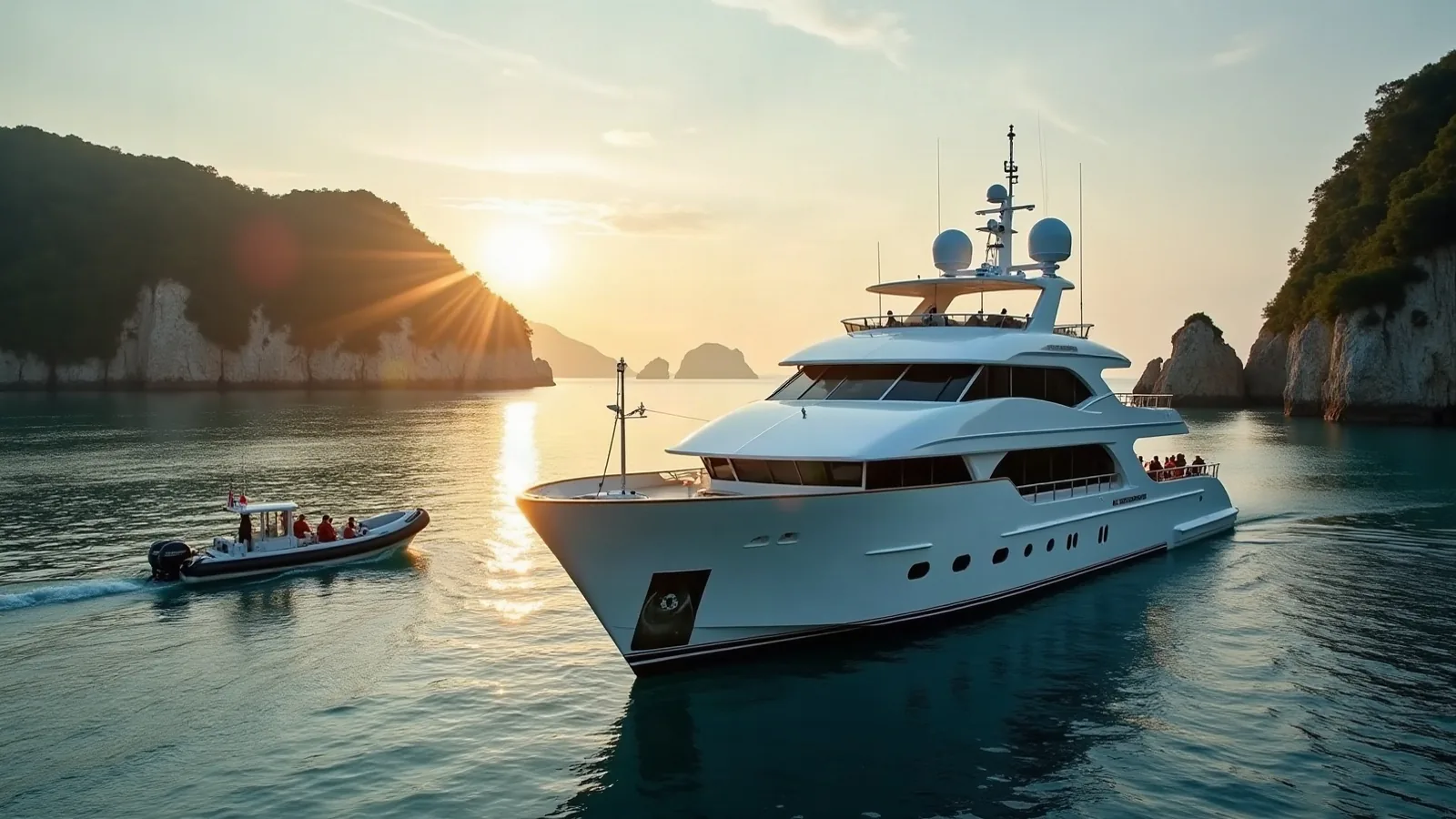
A superyacht call at the Raja Ampat gateway succeeds in the planning quarter, not the arrival week: fuel volume feasibility, formalities strategy, guest movement design and contingency mapping are all advance-team work, and eastern Indonesia is unforgiving of the vessel that skipped it. This is the working checklist we wish every advance team brought to the first call — organised the way the region actually pushes back.
Item one: formalities strategy, not formalities paperwork
The paperwork is known; the strategy is the schedule. Which port events happen where — entry, crew changes, temporary-import milestones, departure — and how each interacts with the itinerary. Sorong’s full CIQP capacity anchors the plan, and the sequence realities are on our entry formalities reference; the advance team’s job is mapping vessel and crew clocks against the cruising programme so no formality lands mid-charter. Weeks of lead time turn every one of these from a problem into a calendar entry.
Item two: fuel volume, proven feasible
Superyacht volume is a planning event in Sorong. The modes exist — arranged barge, truck cycles across a wharf window — but capacity, scheduling and quality assurance all want lead time proportional to volume. The advance team’s questions: what volume, what window, what mode, what metering, what fallback. We answer them specifically and in writing, because ‘fuel is available’ is not an answer a chief engineer should accept from anyone. Volume feasibility confirmed early shapes the whole itinerary’s confidence.
Item three: the guest movement design
Owners and guests reach Raja Ampat through SOQ’s jet connections, and the design question is the whole sequence: aircraft door, greeter, vehicle, jetty, tender, gangway — plus the reverse, plus the contingency for a slipped flight. Treat it as choreography, not taxi booking; the staged pattern in our airport-to-gangway plan scales up with party size and expectation level. Private aviation, where used, adds its own handling questions at SOQ that want asking early, not on approach.
Item four: provisioning across the two lanes
Sorong provisions honestly in two lanes: a genuine local layer — daily fish, tropical produce, staples — and a flown-in specialty layer riding scheduled freight from Jakarta with a week-plus of lead time. A superyacht galley plans both lanes explicitly: what the region supplies beautifully, what must travel, and when each order fires. The chef who receives the local-market picture early builds menus that work with the gateway instead of against it.
Item five: technical cover and the spares pipeline
There is no superyacht yard at the gateway; technical strategy is therefore about prevention and pipeline. Prevention: arrive with the known-wear list addressed. Pipeline: understand the two-stage spares route — international clearance at a gateway, domestic leg east — and its honest one-to-two-week clock for urgent items, as detailed in our spares-import guide. The advance team that pre-positions critical spares and identifies air-freightable fallbacks has bought the itinerary real insurance.
Item six: the anchorage-and-wharf operating pattern
With no marina — stated as plainly here as everywhere on this site — the operating pattern is anchor-based with arranged wharf windows for operations. The advance team confirms: anchorage areas suitable for the vessel’s draught and swing, tender run distances and sea-state exposure, and which wharf windows can be booked for fuel, provisioning and boarding events. This is granular, current, local knowledge — precisely the layer the desk maintains and a visiting team cannot compile remotely.
Item seven: contingency mapping
Medical: know the realistic evacuation routes — SOQ’s jet connections are the region’s medical lifeline as well as its guest artery. Weather: equatorial, cyclone-free, but with seasonal sea states that affect tender operations and anchorage comfort. Communications: coverage is city-good, park-variable; plan accordingly. Political-administrative: regulations evolve, and the team that verifies current requirements beats the team that read a forum post from two seasons ago. Each contingency costs an email now or a scramble later.
Item eight: crew welfare and the long stay
Advance teams plan for guests and forget the crew, and eastern Indonesian itineraries are long ones. Sorong offers the practical layer — SIM cards and data, town runs, laundry cycles, medical and dental basics, crew rotation through the jet connections — and the desk stages crew logistics with the same machinery it uses for guests, scaled to crew budgets. A crew that can reach town, reach home and reach a dentist stays sharp through a season; the cost of arranging it is trivial against the cost of not.
Working with the desk
Superyacht support here is contracted under PT Komodo Vessel Management, scoped in writing per call: formalities, fuel, provisioning, movements, wharf windows and the coordination that binds them, quoted in USD with official items at cost. The full service shape is on the superyacht support page. Send the advance team’s first questions — vessel particulars, window, volumes, party profile — and the answers come back specific, written and honest about what the gateway can and cannot do. That honesty, early, is the most valuable line in the whole checklist.
Frequently Asked Questions
How far ahead should a superyacht plan an eastern Indonesia visit?
Months, not weeks: formalities strategy, fuel volume feasibility, guest logistics and contingency mapping all reward early work. The vessels that glide through planned early; the ones that improvise pay for it in days and workarounds.
What can Sorong actually deliver for a superyacht?
Full CIQP clearance capacity, staged fuel volume by arranged modes, provisioning to the honest limits of the local-plus-flown-in split, jet-served guest movements, and coordination that treats the call as a project. What it cannot deliver: marina berths, shoreside luxury infrastructure — stated plainly.
Is there a berth a superyacht can book?
No. Sorong has no marina; large yachts work commercial wharf windows for operations and lie at anchor otherwise. Every alongside hour is arranged in advance — which is exactly what an advance team is for.
What are the classic advance-team oversights here?
Underestimating fuel logistics lead time, treating guest movements as taxi runs instead of staged sequences, assuming spares can arrive in days, and leaving formalities strategy to the week of arrival.
Who is the contracting party for support?
Engagements are contracted under PT Komodo Vessel Management within Juara Holding Group’s maritime ecosystem, scoped in writing, quoted in USD, with official charges passed through at cost.
Related reading: why Sorong keeps being framed as an eastern-Indonesia superyacht hub.
Send this first
LOA and flag, ETA Sorong, last port, crew and guest count. The desk answers with the sequence, not a brochure.
WhatsApp the desk